

Organic Modern Be
Most organic modern bedroom decor boards look effortless — until you try to recreate one and end up with a room that feels randomly furnished instead of styled. You’ve probably saved dozens of inspiration photos and still don’t know where to start. After a couple of years styling my own space and helping friends refresh theirs, I’ve noticed one thing wrecks this look more than anything else: mismatched undertones. By the end of this guide, you’ll know exactly which palette, materials, and order of steps actually work.
What Is Organic Modern Bedroom Decor?
Organic modern bedroom decor blends two ideas that sound like they shouldn’t mix: the clean lines and restraint of modern design, with the natural materials and organic shapes of a more textured, lived-in space. The “modern” half keeps things calm and uncluttered. The “organic” half keeps it from feeling cold.
This pairing works especially well in bedrooms because the room’s whole job is rest. A space with too many hard edges feels sterile. A space with too many patterns and textures feels busy. Organic modern sits in the middle — warm minimalism, not maximalism, and not a showroom.
One thing that’s easy to miss: the style lives or dies on undertone consistency. Two neutrals can both look “beige” on a paint chip and still clash badly once they’re sitting next to each other in daylight — a cool greige next to a warm oatmeal throws the whole room slightly off, even when every piece looks fine on its own.
Organic Modern vs. Scandinavian, Japandi, and Boho — What’s the Difference?
This is the question that comes up more than any other, and the honest answer is about ratio, not rules:
- Scandinavian keeps the clean lines but leans cooler and sparser — less warmth, less texture
- Boho brings in the natural materials but adds pattern and volume — more clutter, more color
- Japandi splits the difference with a more formal, precise Japanese influence
- Organic modern keeps Scandi’s restraint and boho’s materials, but drops boho’s clutter and Scandi’s coldness
If you’ve been drawn to all three moodboards without knowing why, this is usually why.
Organic Modern Design Principles
Once the definition clicks, the principles behind it are simple to apply. Three ideas do most of the work: restraint, warmth, and intentional editing.
The “modern” half of this style is really about restraint, not about matching furniture sets. Most people focus on finding the right natural materials, but what actually matters more is limiting how many different shapes and colors are in the room at once. Once that clicks, you start editing your choices instead of just adding to them.
The flip side matters just as much. A room can go too far toward minimalism and end up flat or sterile instead of grounded. If a space feels cold rather than calm, the fix isn’t more furniture — it’s one added tactile layer, like a chunky knit throw or a woven basket.
| Principle | What It Means | Common Slip-Up |
|---|---|---|
| Restraint | Fewer, better pieces per surface | Buying too many “natural” accents at once |
| Undertone consistency | One warm or cool base, not both | Mixing cool greige with warm oatmeal |
| Texture balance | Enough softness to avoid sterile | Stripping out texture in the name of minimalism |
| Material limit | 1 dominant wood tone, 2-3 materials | Adding a new material with every purchase |
10 Organic Modern Bedroom Style Ideas
These aren’t just moodboard fragments — each one follows the palette and material rules above, so any of them can be a real starting point.
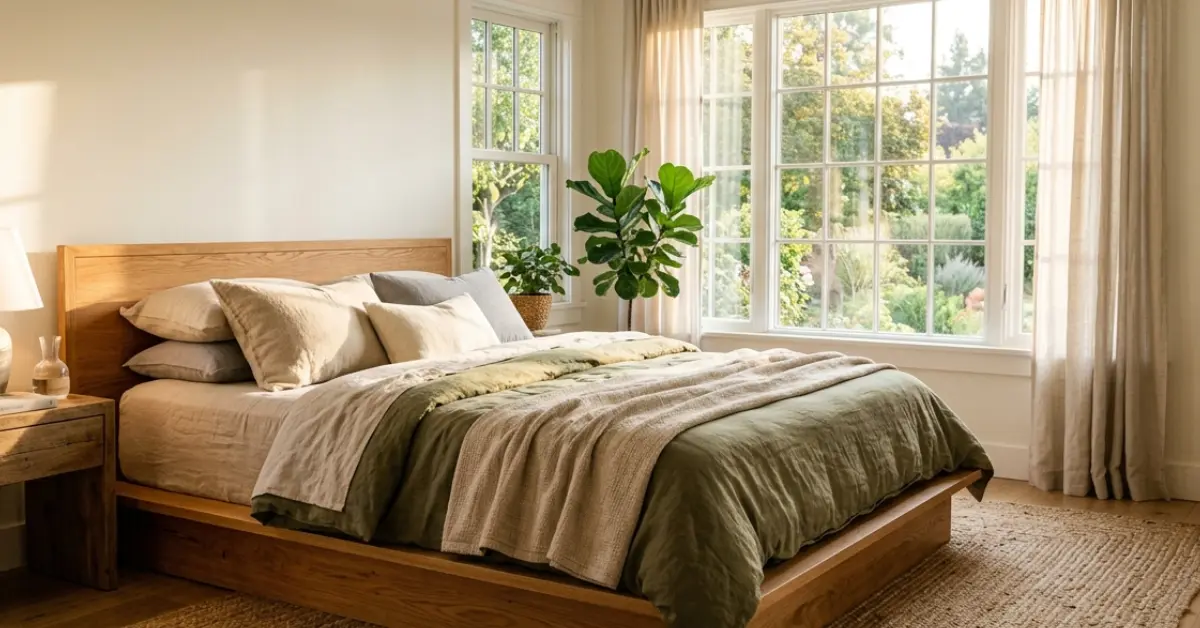
- Golden Oak Escape:Natural oak bed, raw linen sheets, and a single jute rug for that warm, grounded feel.
- All-neutral cocoon — cream, oatmeal, and taupe layered with no hard color contrast
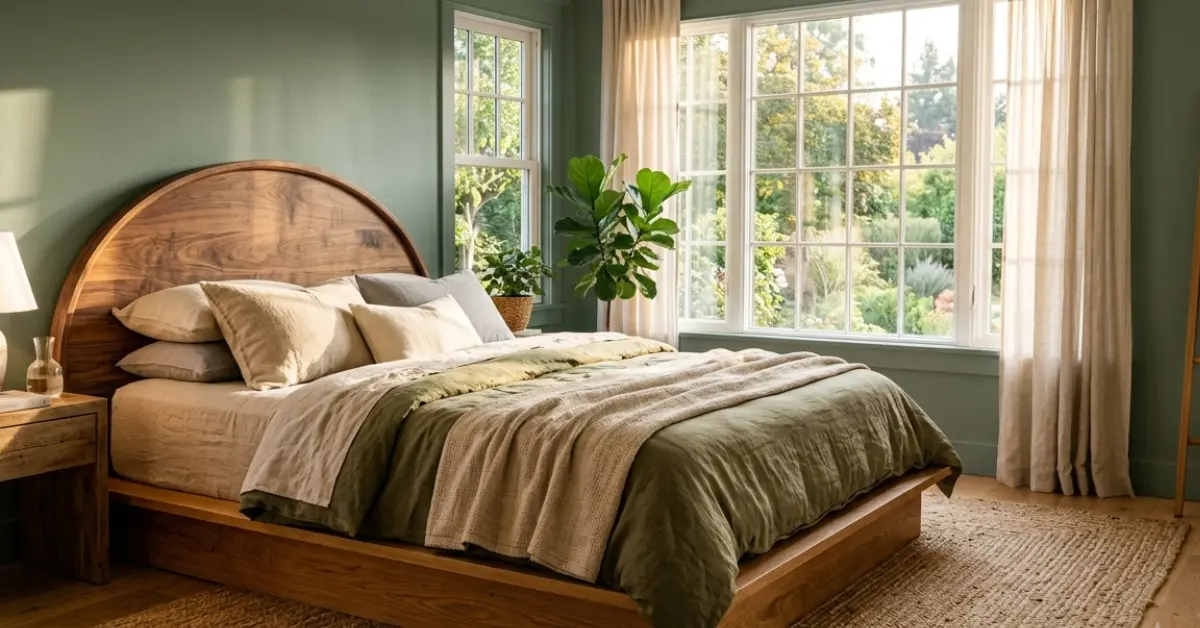
- Curved walnut statement — a single curved walnut headboard as the room’s one bold shape
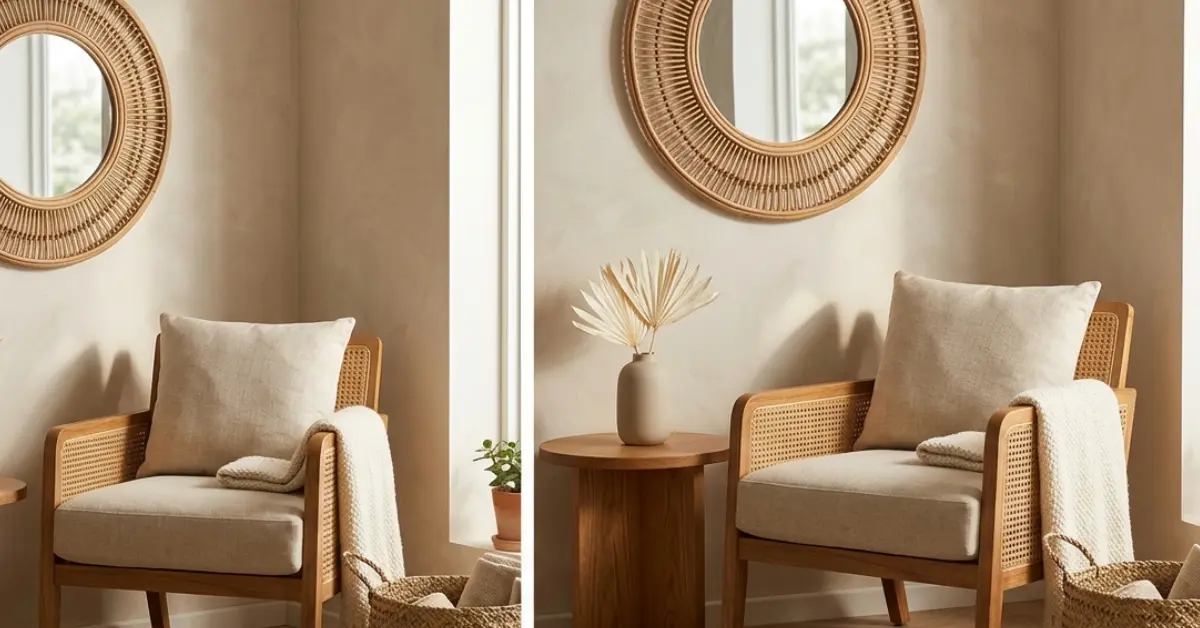
- Rattan accent corner — a rattan chair and mirror paired against a plain white wall
- Bouclé & brass — a bouclé bench and brushed brass sconces for soft-meets-warm contrast
- Terracotta whisper — one terracotta vase, otherwise entirely neutral
- Low-profile platform — a low-profile furniture set with almost no visible legs, for an airy floor line
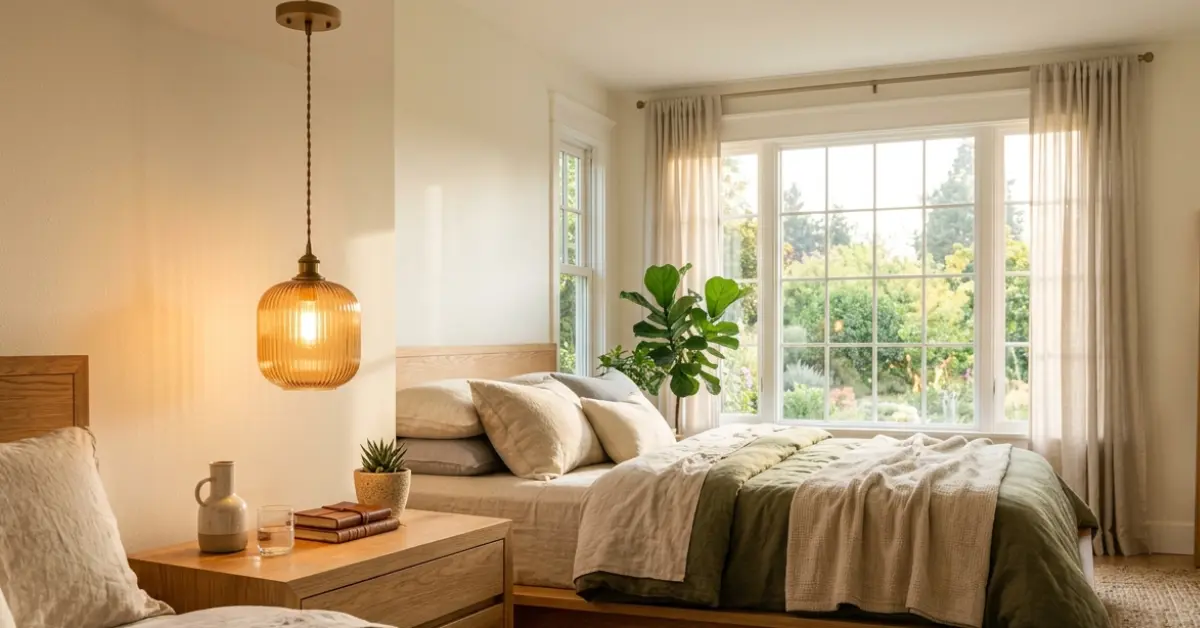
- Sculptural pendant focus — a single sculptural lighting piece as the room’s visual anchor
- Greenery-forward — one large plant doing the work of several small accents
| Style Idea | Dominant Palette | Key Material |
|---|---|---|
| Warm oak & linen retreat | Warm white, oak | Linen, oak |
| Sage & stone calm | Sage, stone gray | Stone, matte black |
| All-neutral cocoon | Cream, oatmeal, taupe | Wool, cotton |
| Curved walnut statement | Deep walnut, ivory | Walnut wood |
| Rattan accent corner | White, natural rattan | Rattan, cane |
| Bouclé & brass | Cream, brass | Bouclé, brass |
| Terracotta whisper | Neutral + terracotta | Ceramic, clay |
| Low-profile platform | Beige, greige | Oak or ash |
| Sculptural pendant focus | Neutral base | Metal, glass |
| Greenery-forward | Neutral + green | Wood, ceramic |
Furniture, Layout & Wall Decor
Furniture shape does more heat-lifting in this style than color does. Low-profile furniture with softened, curved edges keeps the room feeling grounded instead of boxy — a rounded nightstand or an arched mirror does more for the “organic” half of the style than any accessory.
Layout follows the same restraint principle from earlier: leave visible floor and wall space. A wall with one large piece of abstract art or a single woven hanging reads as intentional. A wall with five small frames reads as cluttered, even if each frame is tasteful on its own.
| Furniture Piece | Recommended Shape/Material |
|---|---|
| Bed frame | Low-profile platform, oak or walnut |
| Nightstand | Rounded corners, wood or cane front |
| Mirror | Arched or organic-shaped frame |
| Wall decor | One large piece, not several small |
| Seating | Curved silhouette, bouclé or linen |
Color Palette & Materials Guide
The neutral color palette is the backbone of this whole look, and it’s also where most rooms quietly go wrong. Pick your undertone before you buy a single item — everything else gets measured against it.
The biggest mistake people make is buying too many natural pieces without a shared color or material thread — a rattan mirror here, a jute rug there, a bouclé chair somewhere else — until the room reads as cluttered rather than calm. The fix is locking in 2-3 core neutrals and one wood tone first, then choosing every future piece against that baseline.
| Color | Description | Best Use |
|---|---|---|
| Warm white | Soft, not stark, slight cream cast | Walls, bedding base |
| Taupe | Balanced warm-gray | Rugs, upholstery |
| Greige | Warm gray-beige | Walls, larger furniture |
| Sage | Muted, dusty green | Accent wall, textiles |
| Mushroom | Deep warm gray-brown | Curtains, throws |
| Matte black | Sharp contrast, used sparingly | Lighting, hardware |
Best Natural Materials for This Style
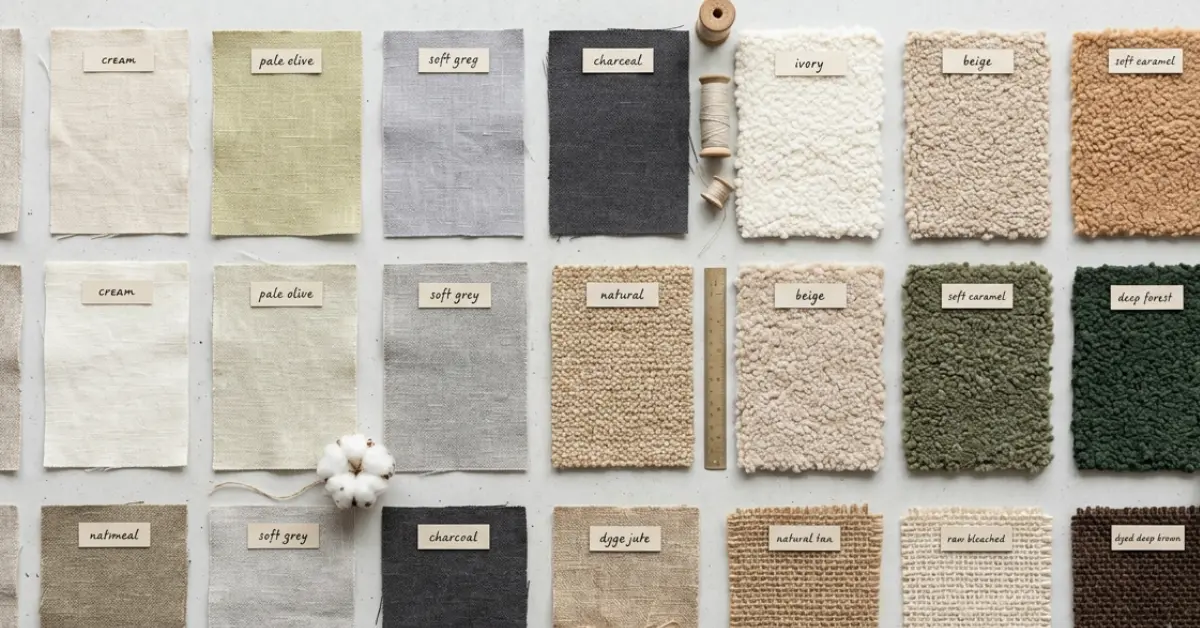
- Rattan and cane — lightweight texture for chairs, mirrors, headboards
- Linen — the default bedding fabric for this look; breathable and naturally textured
- Jute and sisal — the go-to rug materials; durable and visually warm
- Reclaimed wood or walnut furniture — the dominant wood tone that ties furniture together
Bedding, Textures & Rugs
Texture is what keeps a restrained palette from feeling flat.
| Texture Layer | Example Item | Material |
|---|---|---|
| Base | Fitted sheet + duvet | Linen |
| Rug | Area rug | Jute or sisal |
| Throw | Folded throw blanket | Chunky knit or bouclé |
| Storage | Basket or tray | Woven rattan |
Lighting & Plants (Biophilic Touches)
Lighting color temperature changes this room’s mood faster than almost anything else. In one small 10×11 ft refresh, switching two lamps to warmer bulbs — alongside new bedding and a jute rug — made the room read as noticeably calmer within a weekend, for about $300 total, without touching paint or furniture.
Stick to warm lighting in the 2700K-3000K range, and let one sculptural lighting piece act as a focal point instead of adding several small fixtures.
Best Plants for an Organic Modern Bedroom
- Snake plant — low light, low water, sculptural upright shape
- Fiddle leaf fig — a bold single statement plant for an empty corner
- Pothos — trailing greenery for a shelf or high surface
- Dried pampas grass — zero-maintenance texture in a ceramic vase
Small, Rental & Budget-to-Luxury Bedrooms
None of this requires paint or built-ins to start. Bedding, a rug, and lighting cover the most visual area in a room for the least cost and effort — which makes them the right starting point whether you’re renting or just working with a tight budget.
In a small bedroom, the same restraint principle just matters more: uncluttered floor space and one dominant wood tone will make a tight room feel larger than adding more furniture ever will.
| Budget-Friendly Swap | Luxury Upgrade Equivalent |
|---|---|
| Linen duvet set | Custom upholstered headboard |
| Warm-bulb swap | Sculptural designer pendant |
| Jute rug | Hand-knotted wool-jute blend rug |
| Ceramic vase + dried grass | Live sculptural plant, professionally styled |
Common Mistakes + Quick Shopping Checklist
Two failure modes cover almost every organic modern bedroom that doesn’t quite work: buying too many natural pieces without a shared undertone, which reads as cluttered boho, and stripping out too much texture in the name of minimalism, which reads as sterile. Both are fixable by returning to the same rule — pick the palette first, then edit everything against it.
| Checklist Category | Item |
|---|---|
| Palette | 2-3 core neutrals, one wood tone |
| Bedding | Linen duvet, textured throw |
| Rug | Jute or sisal |
| Lighting | Warm bulbs (2700K-3000K), one sculptural fixture |
| Accent | One plant, one ceramic piece |
Frequently Asked Questions About Organic Modern Bedroom Decor
What is organic modern bedroom decor? It’s a bedroom style that combines the clean lines and restraint of modern design with the natural materials and warmth of organic textures — think linen, wood, and rattan against a calm neutral palette.
How is organic modern different from boho or Scandinavian style? Organic modern keeps Scandinavian’s clean lines and boho’s natural materials, but drops boho’s clutter and Scandinavian’s colder feel. It’s a middle-ground ratio, not a separate set of rules.
What colors work best for an organic modern bedroom? Warm neutrals like cream, taupe, greige, sage, and mushroom, with matte black used sparingly for contrast. Consistent undertone matters more than the exact shade.
Can I get this look as a renter or on a budget? Yes — bedding, a rug, and warm lighting cover the most visual area for the least cost and don’t require paint or built-ins.
What’s the biggest mistake people make with this style? Buying too many different natural pieces without a shared palette, which reads as cluttered rather than calm. Locking in 2-3 neutrals first prevents this.
How do I make a small bedroom feel organic modern? Keep the floor and walls uncluttered, stick to one dominant wood tone, and choose fewer, larger pieces instead of many small ones.
What lighting works best for this style? Warm-white bulbs in the 2700K-3000K range, plus one sculptural lighting piece as a focal point instead of several small fixtures.
What materials define organic modern design? Wood (oak, walnut, reclaimed), rattan, cane, linen, bouclé, and jute or sisal for rugs — used in a limited, consistent mix.
Bringing It All Together
You now have what most Pinterest boards don’t give you: an actual order of operations. Lock in your neutral palette and wood tone first. Swap bedding, rug, and lighting before buying new furniture. Layer in texture and one or two natural accents last, once you can see what the room still needs.
- Palette and undertone come before any purchase
- Bedding, rugs, and lighting give the biggest visual return for the least cost
- Texture keeps restraint from turning sterile
- One dominant wood tone ties every piece together
That’s the whole system behind organic modern bedroom decor — start with the palette, edit as you go, and the room takes care of the rest.