

There’s this strange moment I’ve seen in almost every home I’ve worked in.
Someone takes me to their living room, waits for me to look at the walls, and then says something like:
“I don’t know why… but this room still feels empty.”
Even with a nice sofa.
Even with the perfect rug.
Even with the expensive lighting.
And they’re right.
A room without depth feels flat — almost like it’s missing its soul.
That’s the moment I introduce 3D wall art.
And I’ve watched people’s faces light up every single time.
Because it’s not just decoration.
It’s warmth.
It’s personality.
It’s a story rising off the wall — literally.
Over the years, I’ve seen 3D wall art completely transform dull rooms into memorable spaces. Spaces that make guests stop for a second. Spaces that feel crafted, intentional, and high-end without trying too hard.
If you’ve ever looked at your walls and felt something was missing…
you’re in the right place.
Why 3D Wall Art Feels So Powerful
Flat prints are beautiful, sure. But they don’t do anything to a room.
3D art, on the other hand, changes how light moves across the wall.
Morning light makes the art look soft.
Afternoon light adds sharper shadows.
Night lighting pulls out completely different details.
It’s alive.
That’s the thing most people never realize:
3D art interacts with your home.
The shadows shift.
The layers look deeper depending on your angle.
The textures add character you can feel with your hands.
It turns the wall into a living part of the room — not just something behind your furniture.
The Fake 3D Problem Nobody Talks About
I’ve had clients call me frustrated after buying something online that was labeled “3D wall art” only to find out it was a printed picture pretending to be textured.
There’s a simple rule I always tell them:
If you can’t feel it, it’s not 3D.
True 3D art has structure.
It has shadows.
It has dimension.
Fake 3D is just ink.
No depth.
No layers.
No presence.
When you invest in real pieces, you feel the difference instantly.
Types of 3D Wall Art and What They Say About Your Space
Every material brings its own personality.
If you pick the right one, the room instantly feels balanced.
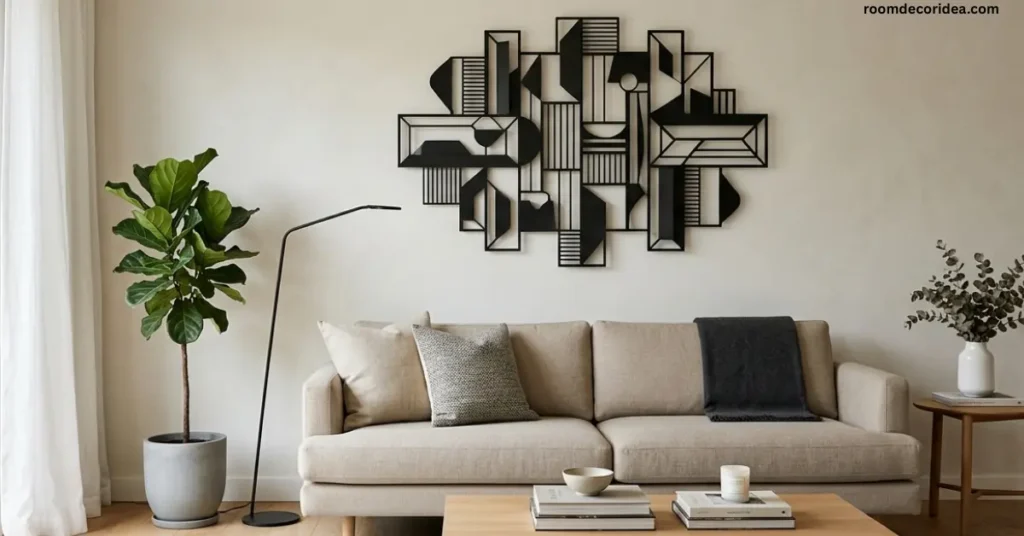
1. Metal 3D Wall Art — Bold, Modern, Confident
Metal always feels intentional.
It’s clean, sleek, and perfect for anyone who wants a modern, polished home.
It works especially well in:
- Living rooms
- TV walls
- Entryways
- Hallways
- Offices
Metal naturally catches light, which makes the room feel more dynamic.
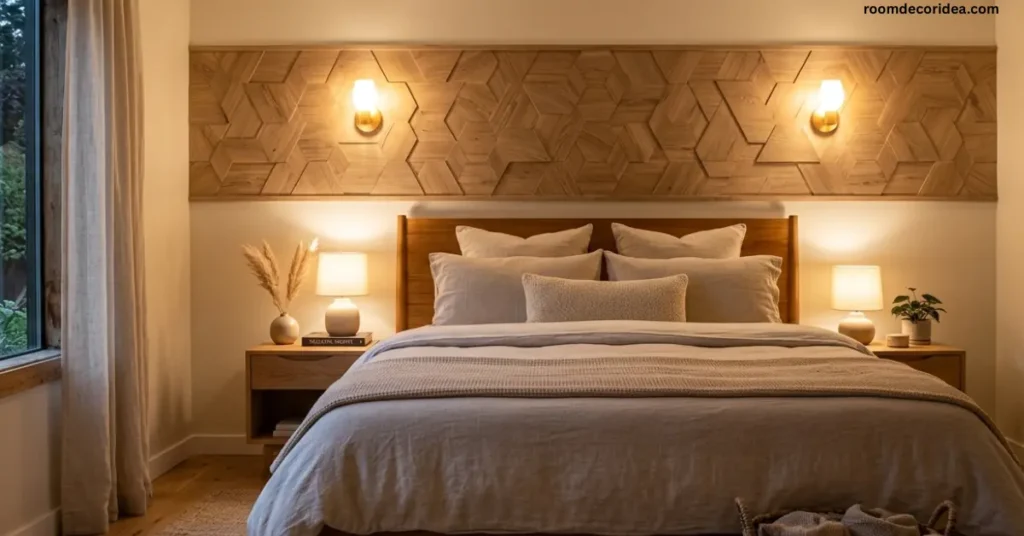
2. Wooden 3D Wall Art — Warm, Cozy, and Natural
Wood brings softness and calm.
It makes a room feel grounded and comfortable.
Perfect for:
- Bedrooms
- Reading corners
- Relaxing living rooms
- Boho-style spaces
The warmth of wood adds a peaceful vibe nothing else can match.
3. Acrylic 3D Wall Art — Clean, Stylish, Minimal
Acrylic is glossy, modern, and easy to maintain.
People love it because:
- It matches almost any decor
- It gives a luxury vibe without being loud
- It’s moisture-resistant (great for bathrooms or kitchens)
Acrylic has a high-end feel that works in both large and small rooms.
4. MDF Structures & Panels — Budget-Friendly & Beautiful
MDF is wildly popular because it creates rich texture at a friendly price.
Great for renters, first homes, or creative walls.
It’s the easiest material to experiment with if you’re just starting out.
5. Textured Art — Organic, Artistic, Handmade Feel
This is the “touch-me” style.
Thick textures, handcrafted patterns, sculptural strokes.
It feels:
- Artistic
- Soft
- Emotional
Perfect for calming rooms where you want personality without loud color.
How to Choose the Right 3D Wall Art (Designer Formula)
People overthink this part.
You don’t need 50 design rules.
Just these 3.
Rule #1: The 60–75% Wall Width Secret
Your art should cover around 60–75% of the furniture width beneath it.
Above a sofa?
Above a console table?
Above a bed?
This rule NEVER fails.
Too small → the room looks awkward.
Too big → the wall feels cramped.
Stay inside the 60–75% range and the wall looks professionally designed.
Rule #2:
Your room already has a mood.
Your art should support it, not fight it.
Minimal room → geometric and angular art
Elegant room → metallic or layered textured panels
Cozy room → warm wood or soft textures
Bright room → bold shapes or modern acrylic
When the wall art matches the room’s energy, the whole space feels intentional.
Rule #3: Light First, Color Second
The art should harmonize with your lighting more than your furniture.
Warm light = gold, bronze, wood
Cool light = silver, black, acrylic
Your wall color also plays a role.
Beige walls love warm tones.
Grey walls love sharp contrasts.
White walls love everything.
Best 3D Wall Art Ideas for Every Room
Over the years, I’ve seen patterns in what works best in different rooms.
These combinations always impress — simple, beautiful, reliable.
Living Room — The Big Statement Zone
This is where most people place their hero piece.
Big metal art, oversized textured panels, or layered geometric sculptures look stunning here.
This is the wall that sets the tone for the entire home.
Bedroom — Calm, Soft, Gentle Layers
Avoid loud colors or overly sharp designs.
Bedrooms love:
- Wood art
- Neutral acrylic
- Soft textured pieces
- Rounded shapes
Above the bed, the right 3D piece makes the whole room feel peaceful.
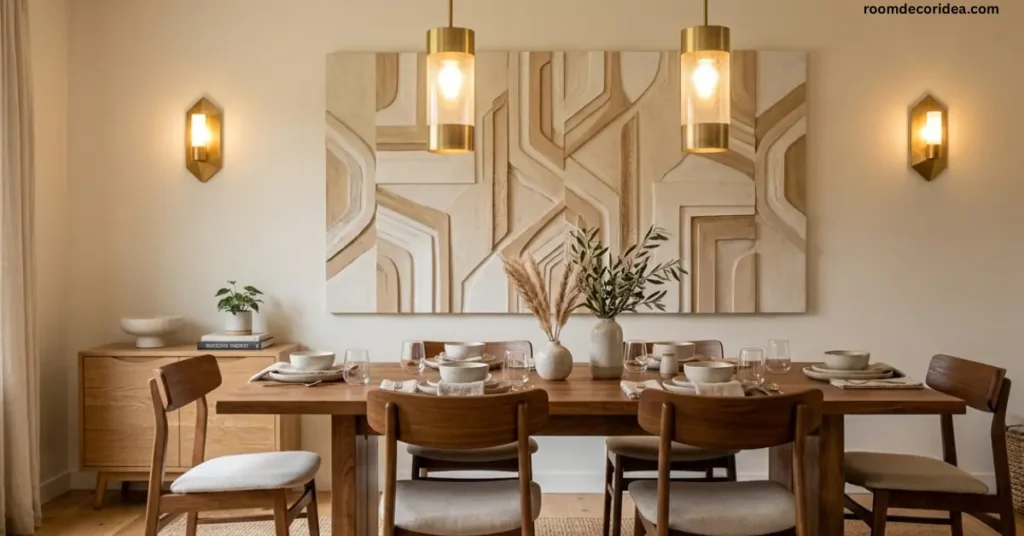
Dining Room — Subtle Luxury & Depth
Dining areas love depth but not chaos.
Think:
- Gold accents
- Abstract textures
- Simple geometric structures
The art should invite calm conversation, not dominate the room.
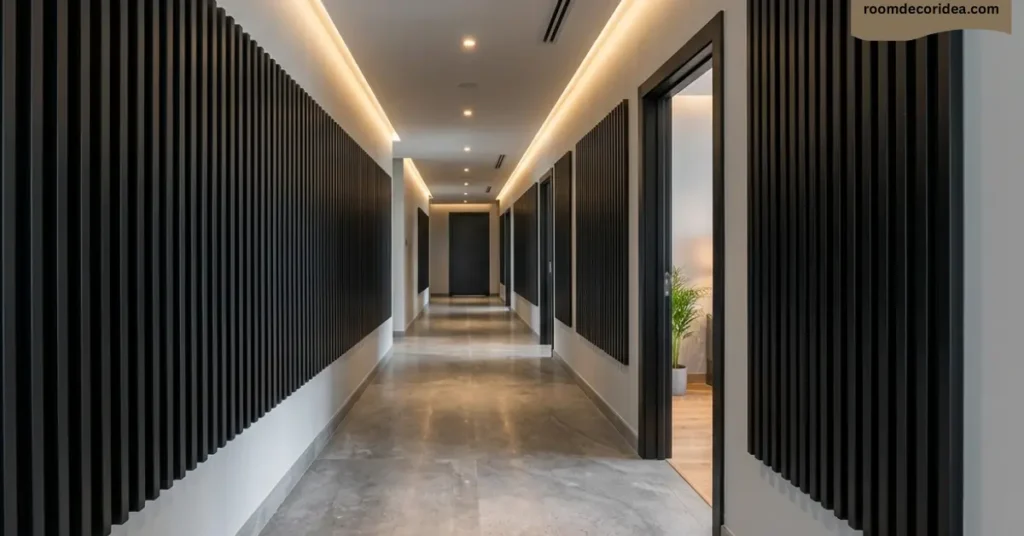
Hallway — Long, Slim, and Vertical Designs
Hallways are the most ignored area in the home.
Tall vertical panels, long stretched pieces, or repeating smaller 3D shapes work incredibly well.
They make the space feel polished instead of forgotten.
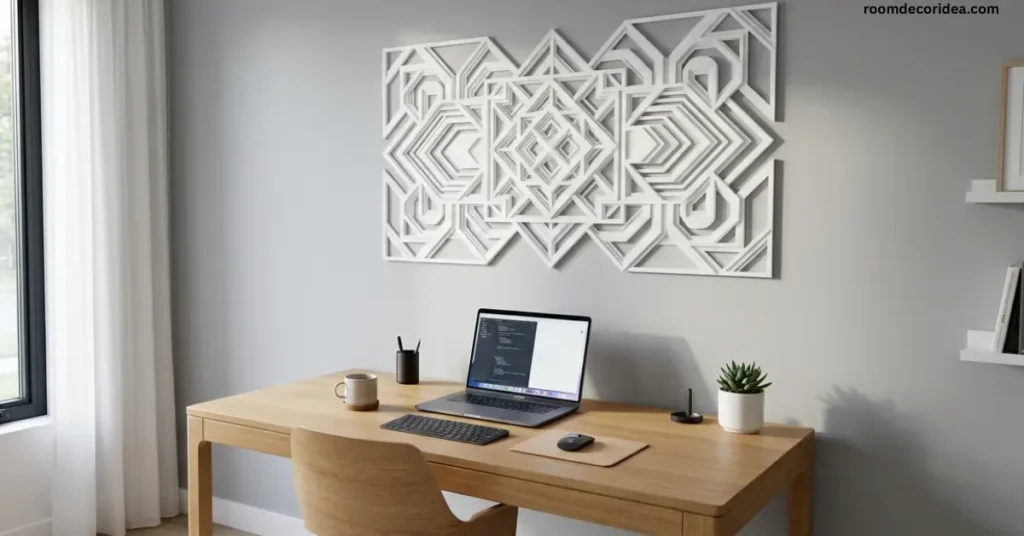
Home Office — Focused, Clean & Minimal
Your workspace shouldn’t distract you.
It should motivate you.
Pick pieces that feel:
- Structured
- Geometric
- Neutral
- Clean
Minimal 3D art improves concentration and adds professional polish.
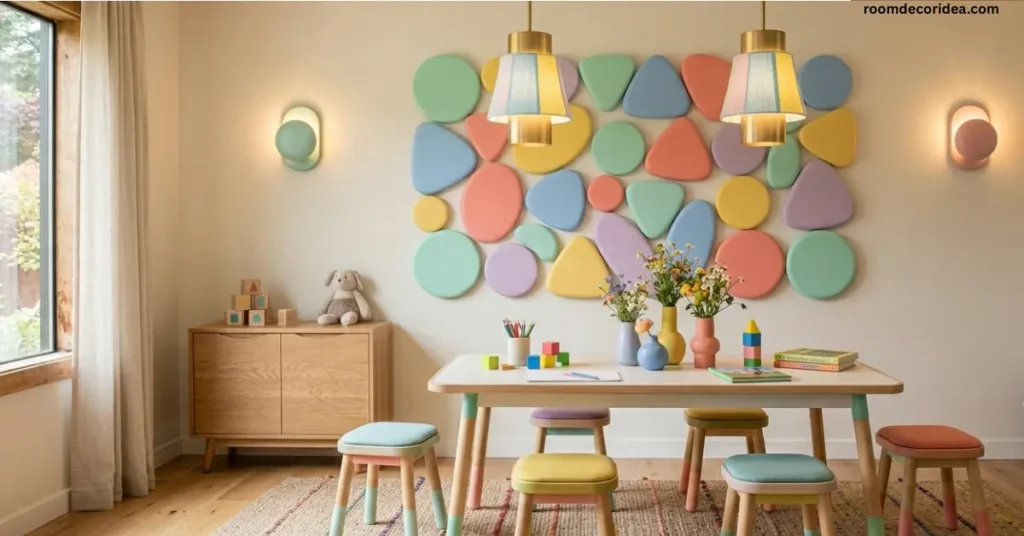
Kids’ Room — Light, Safe, Playful
Soft shapes.
Rounded edges.
Light materials.
3D art in kids’ rooms should feel fun, friendly, and safe.
Think of clouds, stars, balloons, animals — things that spark imagination.
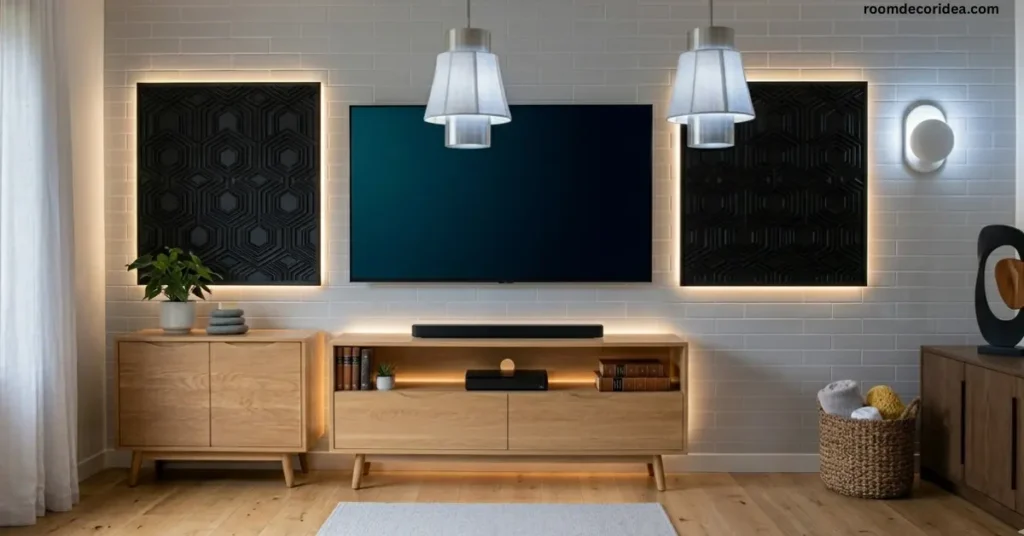
TV Wall — Balance Is Everything
The trick is symmetry around the TV.
Not too big.
Not too small.
Not too reflective.
Choose art pieces that frame the TV without competing with it.
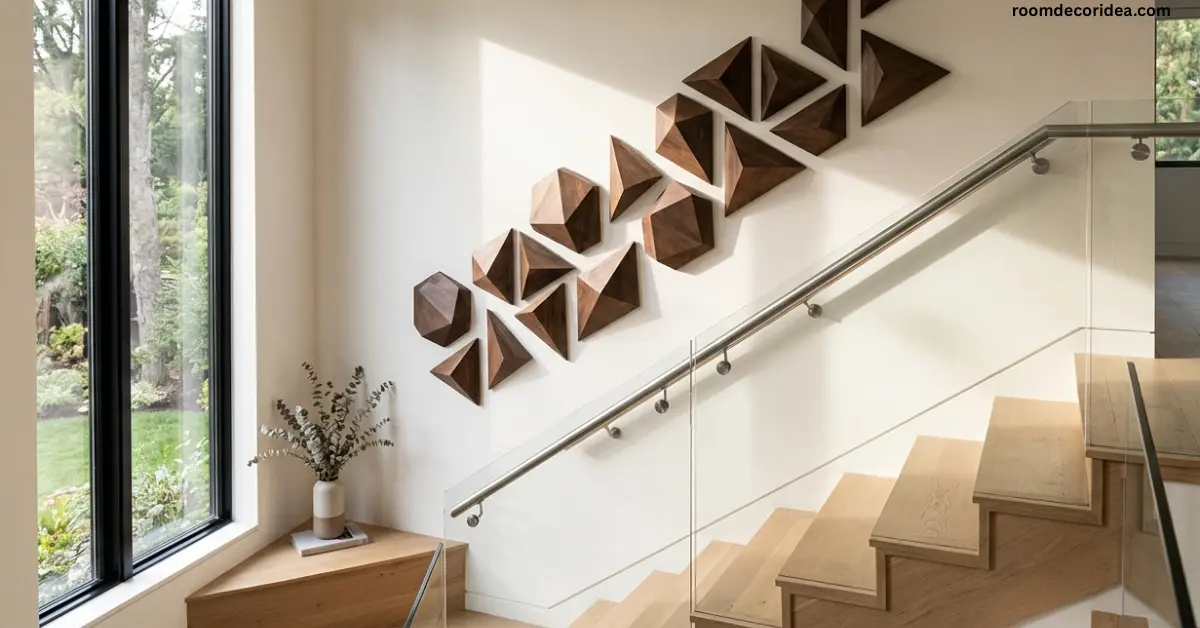
Staircase Wall — Follow the Climb
Staircases LOVE progressive patterns.
From bottom to top, create a flow — circles gradually increasing, shapes rising, panels arranged in a wave.
It turns a simple movement into a design moment.
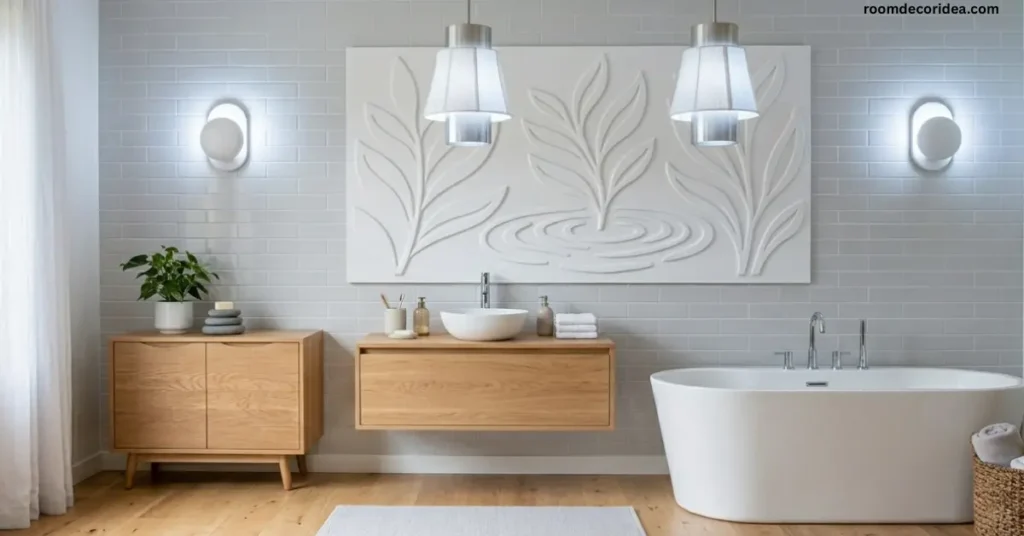
Bathroom — Clean, Water-Friendly, Simple
Waterproof acrylic works best here.
You want something minimal that won’t feel heavy in a small space.
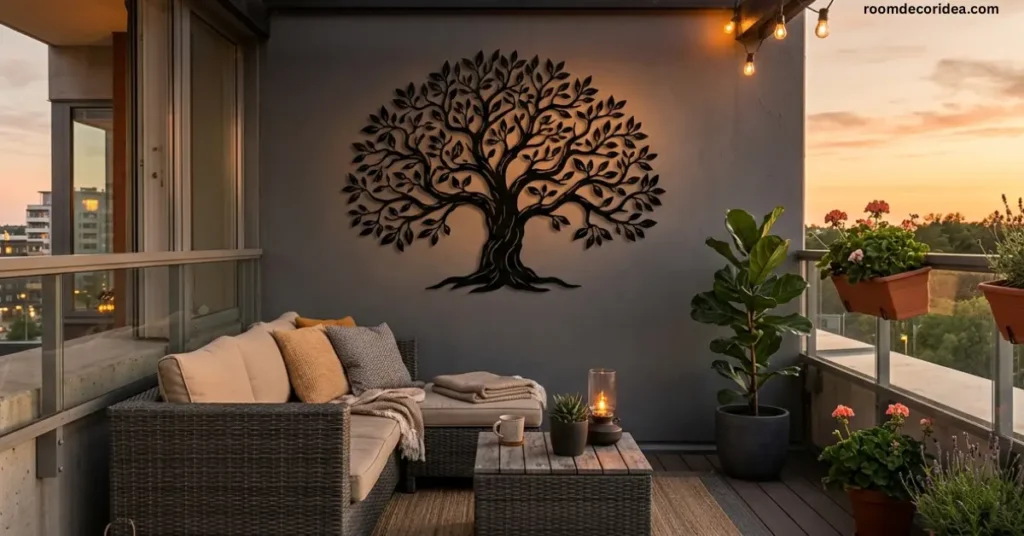
Outdoor Walls
Metal is king outdoors.
It handles sunlight, rain, and humidity.
Outdoor 3D art instantly makes balconies feel like outdoor lounges.
Installation Tips (From Real Experience)
People get nervous about installation, but it’s simple.
Light Pieces (Acrylic, MDF, Small Wood)
Use:
- Adhesive strips
- Renter-friendly hooks
Zero damage. Easy removal.
Medium Pieces
Use:
- Wall nails
- Strong hooks
Good for regular-sized pieces.
Heavy or Large Pieces
Use:
- Screws
- Wall plugs
- Drilled anchors
This ensures the piece stays secure long-term.
Common Mistakes I’ve Seen Too Many Times
I’ll list them so you can avoid them:
- Hanging art way too high
- Buying art before measuring the space
- Choosing colors that fight the lighting
- Mixing too many materials in one wall
- Ignoring the furniture scale
- Overcrowding the wall
- Not thinking about shadow direction
Small mistakes → big frustration.
Small corrections → big beauty.
2026 Trends in 3D Wall Art
Every year, I notice shifts in what people prefer.
Right now, these seven trends dominate:
- Neutral, earthy palettes
- Extra-large oversized panels
- Soft textured artwork
- Geometric structures
- Matte black metal silhouettes
- Handcrafted sculptural art
- Layered minimalist designs
These trends work in almost every modern home.
FAQs
Is 3D wall art easy to maintain?
Yes — just wipe gently with a cloth. Dust doesn’t stick easily to raised textures.
Can renters install 3D wall art?
Yes. Use adhesive strips for lightweight items.
Does 3D art work in small rooms?
Absolutely — it adds depth and makes rooms appear larger.
How long does good 3D art last?
Years. Metal and acrylic pieces can last decades with basic care.
Is it expensive?
Not always. MDF and lightweight acrylic are affordable.
Metal and handcrafted pieces cost more but look stunning.
A Final Thought
Every home has that one wall — the one you stare at and think, “Something’s off.”
Most people try to fix it with paint.
Or furniture.
Or shelves.
But the truth is much simpler:
Sometimes all a room needs is depth. A shadow. A shape. A story rising a few inches off the wall.
That’s what 3D art does.
It brings life back into your space.
It turns flat into warm.
Empty into expressive.
Plain into memorable.
And once you feel that shift…
you never look at walls the same way again.