

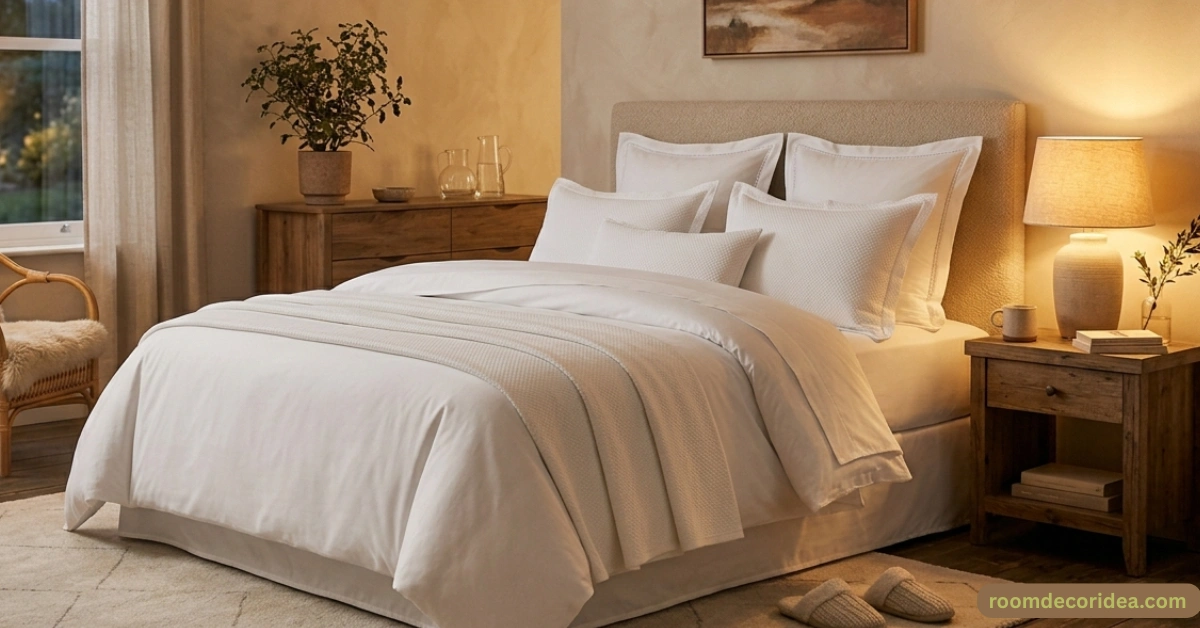
Your bedroom should feel like an exhale — a space that quiets your mind and resets your body the moment you step inside. A calming bedroom isn’t created by accident; it’s shaped by intentional choices that reduce visual noise, introduce softness, and create emotional warmth. Below, you’ll find design ideas and expert guidance to help you build a restful, deeply soothing bedroom that supports real relaxation.
Why a Calming Bedroom Matters for Your Mind, Sleep & Stress Levels
Your bedroom is the last thing you see before sleep and the first thing you see when you wake. Its design plays a powerful role in how you feel. When your environment is peaceful, your nervous system naturally relaxes. Soft colors, gentle lighting, comforting textures — all of these elements create a sense of safety and stillness that makes it easier to unwind.
A calming bedroom minimizes stimulation. It quiets the mind. It allows your body to shift out of “alert mode” and into a restorative state where rest, clarity, and emotional balance become accessible. In short: your bedroom shapes your well-being more than you think.
How Calming Décor Influences Mood & Sleep Quality
A soothing bedroom is built on design principles that work directly with your body’s natural responses.
Soft Color Palettes Regulate Your Nervous System
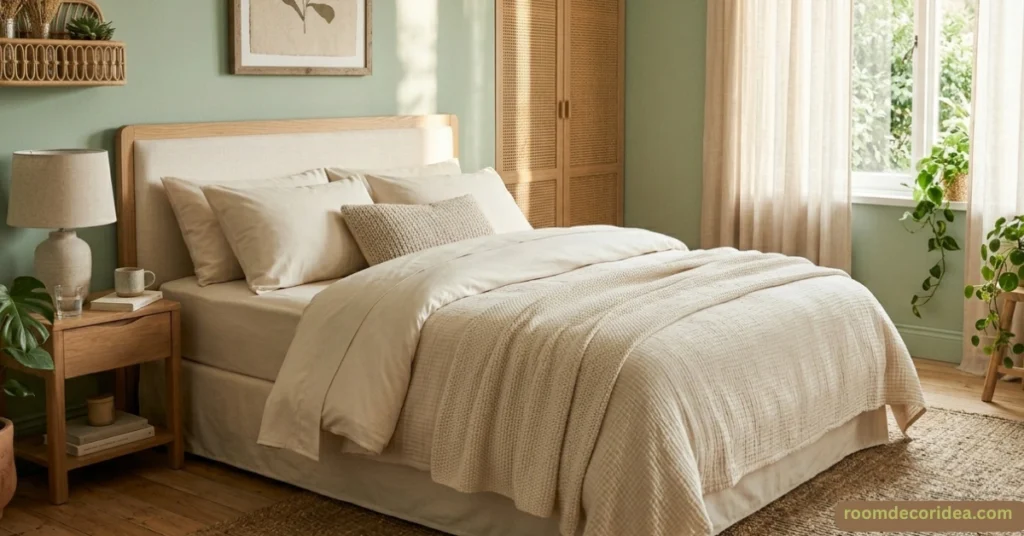
Colors carry emotional energy. Muted tones like warm taupe, cream, soft grey, and gentle sage help slow mental activity and create a softer visual field. When nothing in the room is shouting for attention, your mind finally gets to rest.
Natural Materials Bring Emotional Warmth
Wood, linen, cotton, clay, and rattan feel grounding. They introduce authenticity and comfort, making the room emotionally warmer and more inviting.
Clutter-Free Spaces Reduce Visual Stress
A cluttered room sends your brain into constant scanning mode. A well-edited, simplified space signals calm and clarity.
10 Calming Bedroom Décor Ideas That Create Instant Peace
1. Embrace a Soft Neutral Color Palette
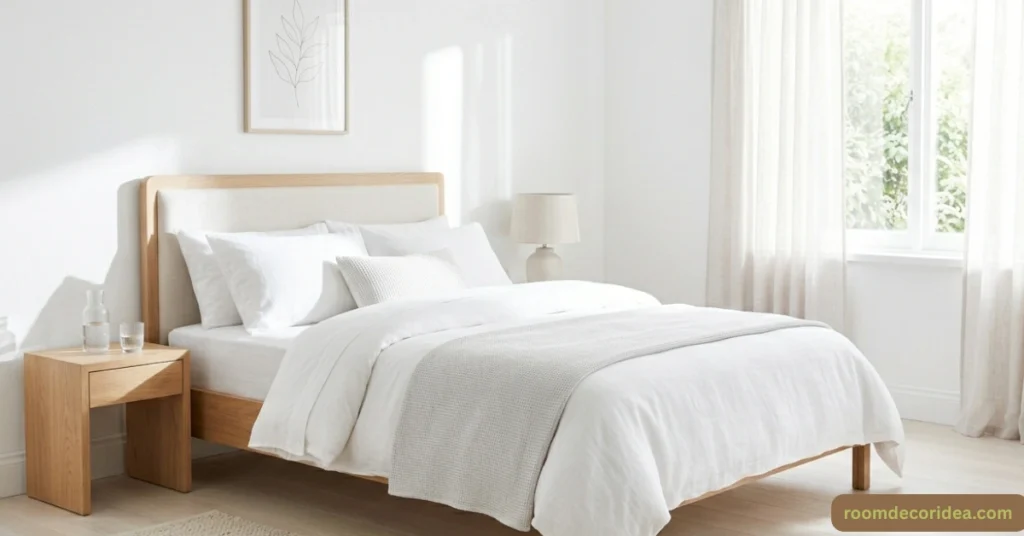
Start with a neutral foundation — warm beiges, creamy whites, muted greys. These shades soften the space and dissolve visual tension. They make the room feel larger, lighter, and emotionally quieter.
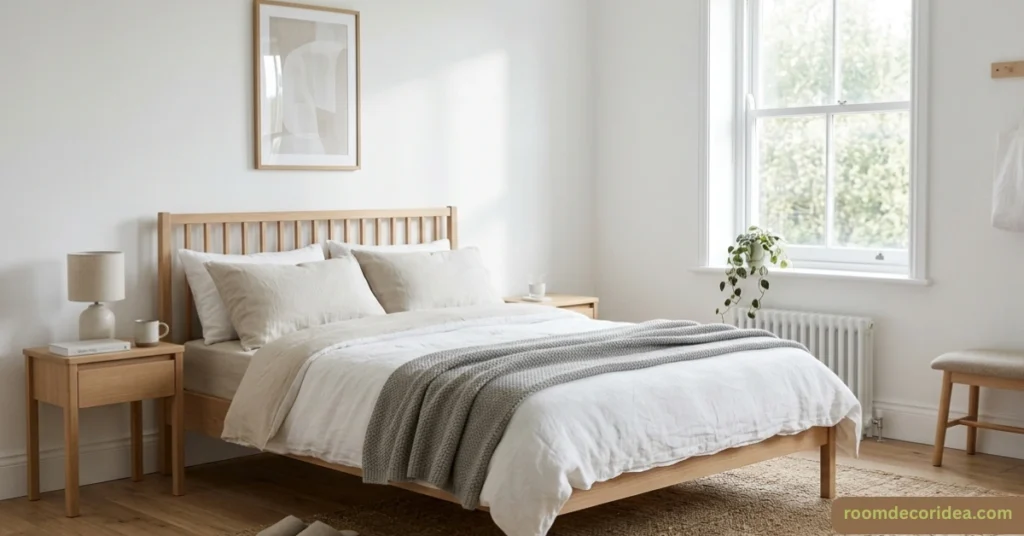
2. Create a Scandinavian-Inspired Minimal Retreat
Scandinavian décor delivers calm through simplicity. Clean lines, breathable fabrics, and natural wood create an atmosphere where nothing feels heavy or overwhelming. Every piece has a purpose, and that intentionality creates calm.
3. Layer Soft, Natural Textures for a Grounded Feel
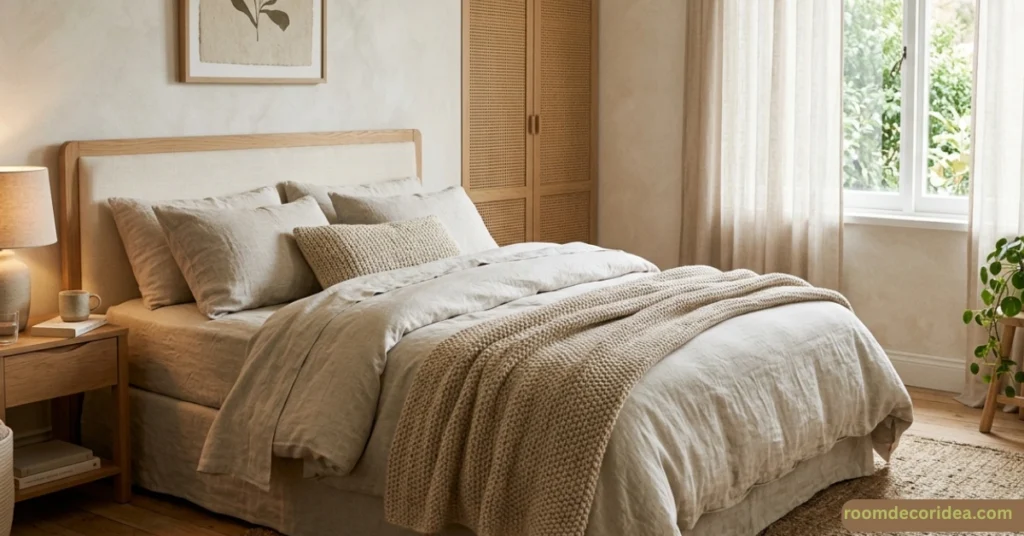
Texture brings sensory comfort. Linen bedding, cotton sheets, knitted throws, and soft wool rugs introduce warmth and tactile softness. Layering creates depth without adding clutter — the perfect balance for a peaceful bedroom.
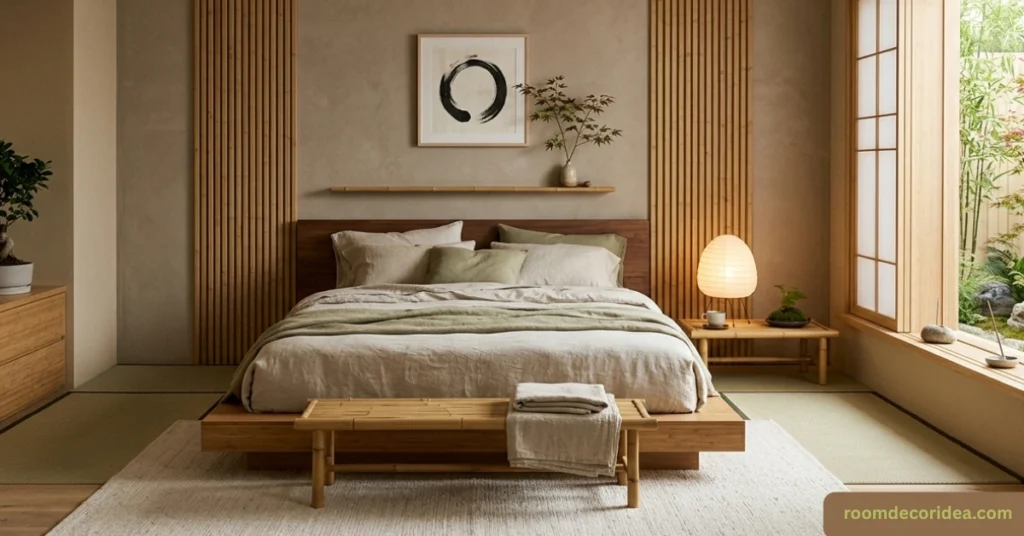
4. Use Warm Ambient Lighting Instead of Harsh Overheads
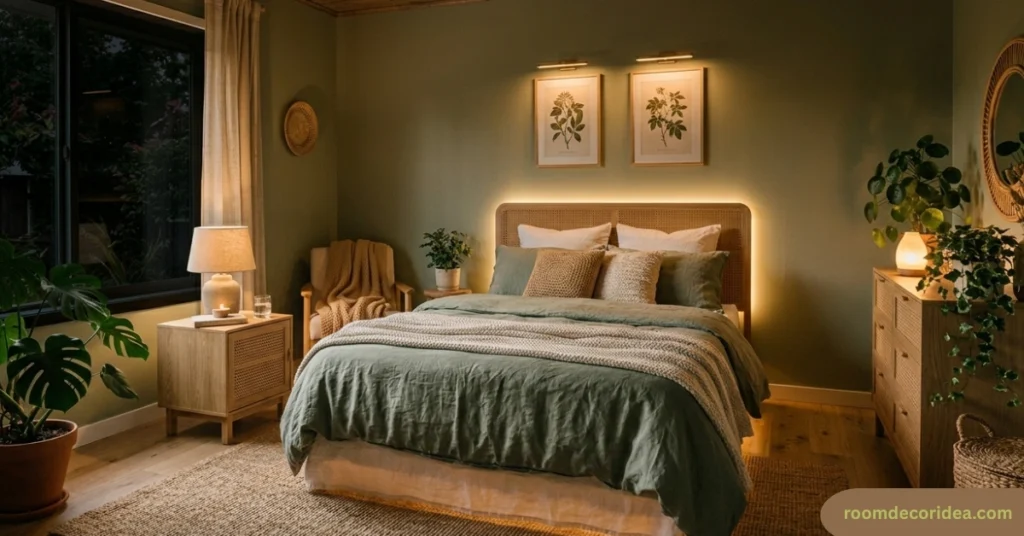
Lighting defines mood. Replace cool white bulbs with warm, low-kelvin lighting for a gentle glow. Add table lamps, sconces, or floor lamps to create layers of soft, ambient illumination that soothe rather than stimulate.
5. Add Organic Shapes and Curves to Soften the Room
Sharp angles create tension; curves create flow. Rounded mirrors, arched headboards, soft-edged furniture, and circular décor pieces introduce a visual softness that makes the room feel more comforting and safe.
6. Incorporate Natural Elements to Enhance Peace
Nature is inherently calming. Add indoor plants, woven baskets, clay vases, wooden accents, or stone décor. These elements connect the room to the natural world, which subconsciously relaxes the body.
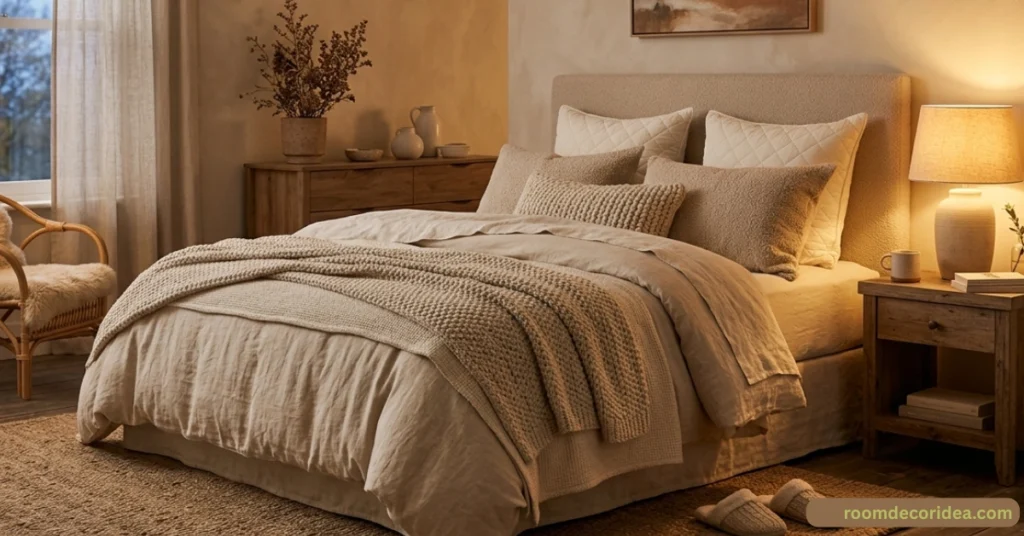
7. Choose Light, Airy Window Treatments for Softness
Sheer or lightweight curtains allow natural light to filter gently into the room. The diffused, golden glow reduces harshness and creates an atmosphere that feels open, serene, and effortless.
8. Keep Surfaces Clean and Intentionally Curated
A calming bedroom doesn’t mean a bare bedroom — it means a thoughtful bedroom. Keep your nightstands and dressers free of excess items. Display only what adds meaning or beauty, not clutter.
9. Use Scent as a Sensory Layer of Calm
Soft aromatics can instantly shift your mood. Lavender, sandalwood, chamomile, and cedar create an atmosphere of restfulness. A subtle room spray, diffuser, or candle makes the space feel emotionally grounded.
10. Invest in High-Quality Bedding for True Comfort
Comfort is the foundation of calm. Choose breathable fabrics like cotton or linen, supportive pillows, and a duvet that feels cloud-like without being heavy. When your bedding feels luxurious, your entire bedroom becomes a sanctuary.
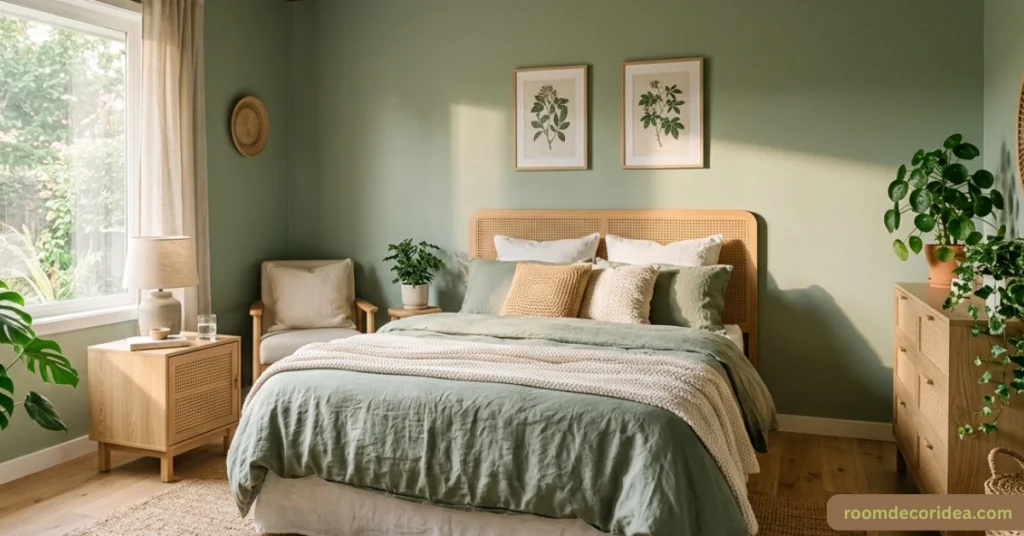
How to Choose the Right Color Palette for a Calming Bedroom
Color sets the emotional tone. The right palette will determine how peaceful your bedroom feels.
Soft Neutrals for Everyday Serenity
Warm neutrals create a sense of clarity and stability. They blend gracefully and soften visual distractions.
Earth Tones for Warmth and Grounding
Shades of clay, sand, sage, and terracotta add warmth without overwhelming the space. These tones mimic nature’s calming effect.
Cool Muted Colors for Relaxation
Soft blues, dusty greens, and smoky greys help regulate your mood and lower stress by cooling the visual temperature of the room.
The key is consistency. Choose a palette and let it flow across your walls, bedding, rugs, and décor so your space feels cohesive and serene.
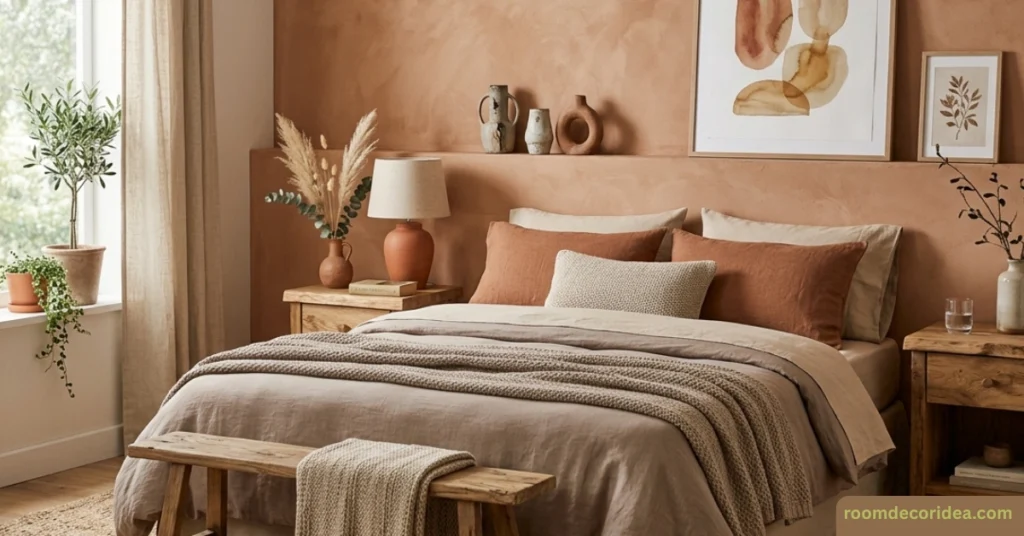
How to Add Texture, Layers, and Softness Without Creating Clutter
Textures bring comfort, but too many can create chaos. The secret is layering intentionally.
Start With a Simple Base Layer
Use breathable cotton or linen sheets as your foundation. They’re smooth, airy, and feel clean against the skin.
Add One or Two Textural Layers
A lightweight duvet, quilt, or soft woven throw adds depth without overwhelming the eye.
Balance Visual Weight
If your bedding is richly textured, keep pillows simpler. If your rug is plush, choose minimal curtains. It’s all about equilibrium.
How to Use Lighting to Create a Calm, Restful Bedroom Atmosphere
Lighting shapes emotion more than any other design element.
Choose Warm Lighting Only
Warm bulbs mimic the soothing glow of sunset and signal your brain that it’s time to relax.
Use Multiple Light Sources
Layered lighting is ideal: table lamps for softness, wall sconces for warmth, floor lamps for depth. Together they create a gentle ambiance perfect for winding down.
Avoid Harsh Overhead Lights at Night
Bright overhead lighting can jar your senses. Keep it off in the evening and rely on softer sources instead.
Final Thoughts
A calming bedroom is a gift to yourself — a personal retreat where the world slows down and your body can finally breathe. When you choose gentle colors, soft textures, intentional lighting, and décor that supports comfort over clutter, your bedroom becomes more than a room. It becomes a sanctuary.
The most restful bedrooms are built on simplicity, warmth, and softness. Create those, and you create calm.
Frequently Asked Questions
What colors create the calmest bedroom atmosphere?
Soft neutrals, muted earth tones, and cool, dusty shades like sage and slate blue are consistently the most calming.
Which lighting is best for a calming bedroom?
Warm, low-kelvin lighting (2700K or lower). Avoid bright white bulbs at night, as they overstimulate your senses.

Does clutter really affect how calm a bedroom feels?
Yes — visual clutter creates mental clutter. A clean, intentional space significantly reduces stress.
What textures feel the most calming?
Linen, cotton, soft knits, and natural fibers like wool or jute bring warmth without heaviness.