

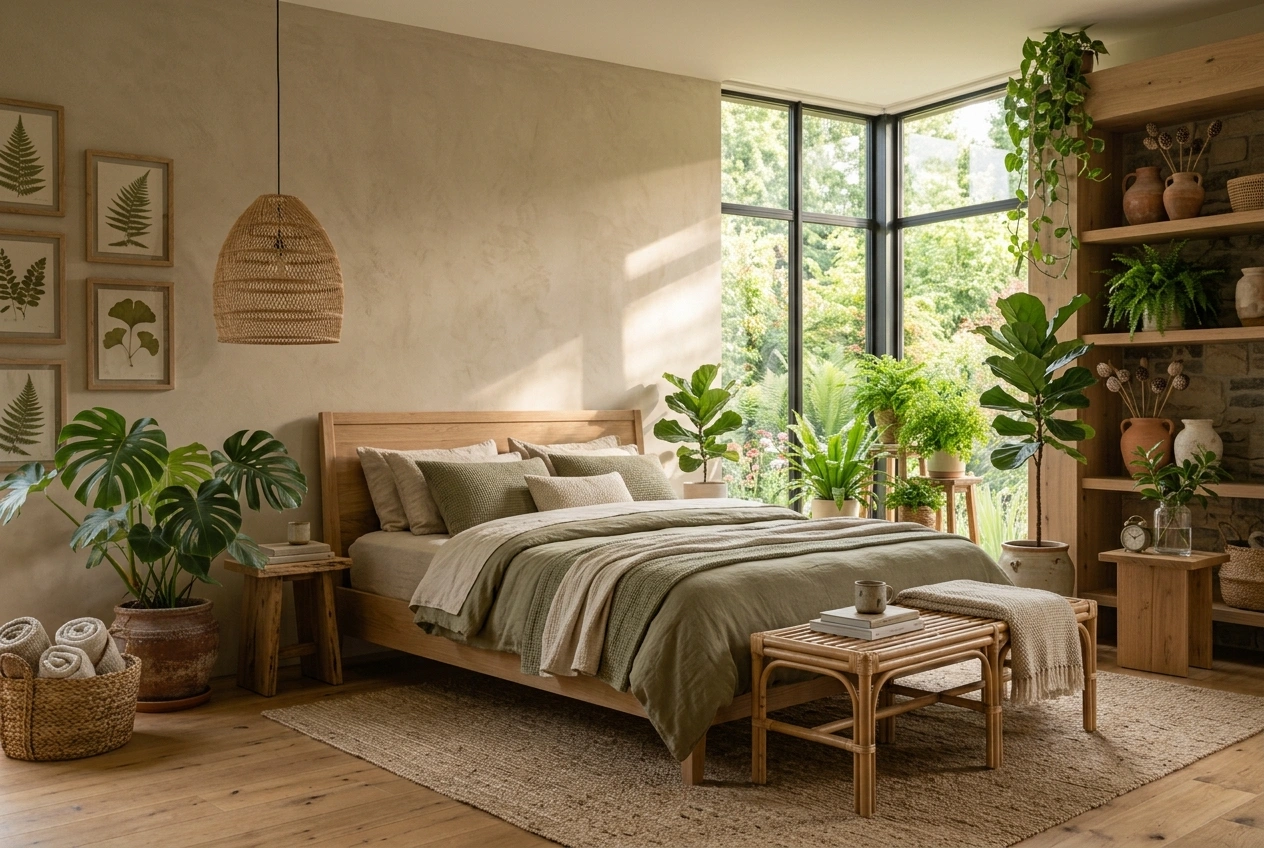
Biophilic home decor is more than filling your rooms with houseplants. It is about creating a stronger visual and sensory connection with nature through greenery, natural light, wood, stone, organic shapes, earthy colors, natural textures, fresh air, and views of the outdoors.
The best part is that you don’t need a huge house, expensive furniture, or a complete renovation to achieve the look. A small apartment can feel just as natural and inviting with the right combination of plants, materials, lighting, and thoughtful styling.
If your home currently feels cold, flat, or disconnected from nature, these biophilic home decor ideas can help you create a warmer and more relaxing space without making it look like a greenhouse.
What Is Biophilic Home Decor?
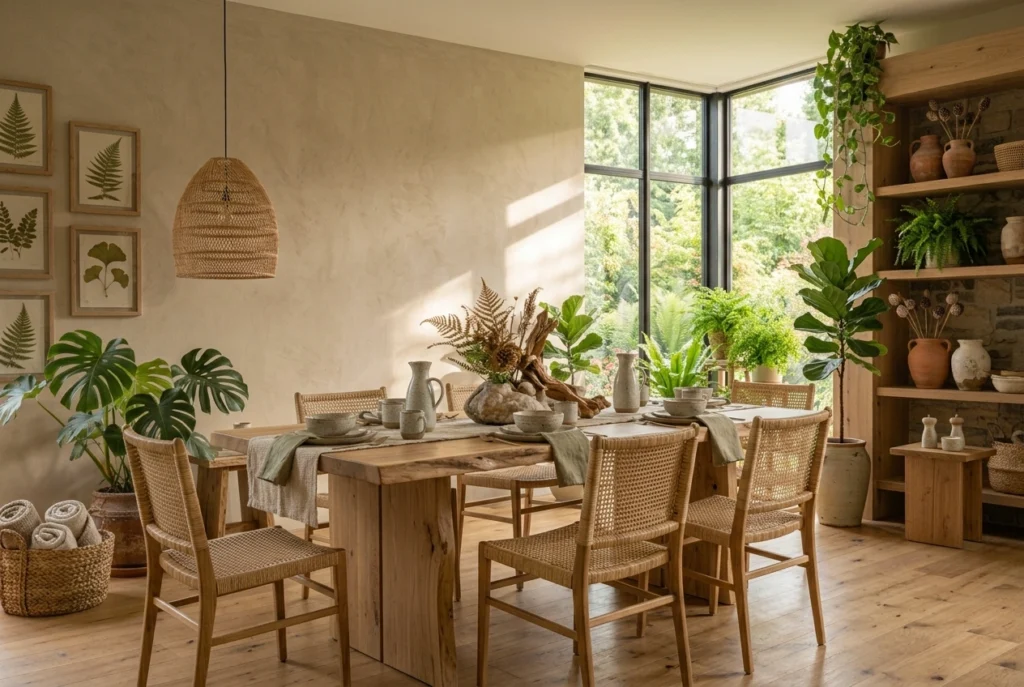
Biophilic home decor uses interior design to strengthen the connection between people and the natural world.
That can mean adding plants, but it can also mean using daylight, natural materials, organic forms, nature-inspired colors, botanical patterns, outdoor views, and tactile materials such as linen, wool, jute, rattan, wood, and stone.
In simple terms, biophilic decor makes nature part of the way your home looks and feels.
| Element | Example |
|---|---|
| Plants | Indoor trees, herbs, hanging plants |
| Light | Large windows, sheer curtains |
| Materials | Wood, stone, bamboo |
| Colors | Sage, olive, sand, terracotta |
| Textures | Linen, wool, jute, rattan |
| Shapes | Curved furniture and organic forms |
| Patterns | Leaves, flowers, landscapes |
| Views | Windows overlooking greenery |
Biophilic Design vs. Nature-Inspired Decor
These terms are related, but they’re not exactly the same.
A nature-inspired room might simply use botanical wallpaper or green cushions. A biophilic room takes a broader approach by combining several elements of nature throughout the space.
For example, a genuinely biophilic living room might combine:
natural daylight + indoor plants + oak furniture + linen upholstery + stone accents + organic shapes + an outdoor view.
That’s much more intentional than simply adding a few green accessories.
Is Biophilic Decor Just About Plants?
No.
Plants are one of the easiest ways to introduce biophilic elements, but they are only one piece of the design.
If your room doesn’t receive enough sunlight for plants, you can still create a nature-connected interior with wood, natural fabrics, earthy colors, organic shapes, botanical artwork, natural light, and views.
Why Is Biophilic Design So Popular?
Modern homes can contain a lot of hard surfaces, artificial lighting, electronics, and manufactured materials.
Biophilic design offers a visual counterbalance by bringing natural elements back into the environment.
It can also make a room feel warmer and more visually interesting because natural materials tend to provide variation in color and texture.
The goal isn’t to create a perfect “nature room.” It’s to create a home where natural elements feel integrated rather than added as an afterthought.
The 8 Elements of a Biophilic Home
Before buying anything, understand the basic building blocks.
1. Natural Light
Use windows and daylight as design features instead of hiding them behind heavy treatments.
2. Living Greenery
Use plants at different heights to create depth.
3. Natural Materials
Wood, stone, rattan, bamboo, cork, jute, linen, and wool can introduce tactile variety.
4. Nature-Based Colors
Think beyond basic green. Sand, clay, cream, olive, moss, brown, terracotta, and muted blue can all work.
5. Organic Shapes
Curved tables, rounded mirrors, arched furniture, and irregular stone shapes can soften a room.
6. Outdoor Connections
If your home has a garden, balcony, patio, or green view, make it part of the interior experience.
7. Nature-Inspired Patterns
Botanical prints, landscapes, water-inspired patterns, and subtle leaf motifs can reinforce the theme.
8. Sensory Details
Texture, natural scents, fresh air, changing daylight, and even natural sounds can contribute to the overall atmosphere.
30 Biophilic Home Decor Ideas
1. Create a Layered Indoor Plant Display
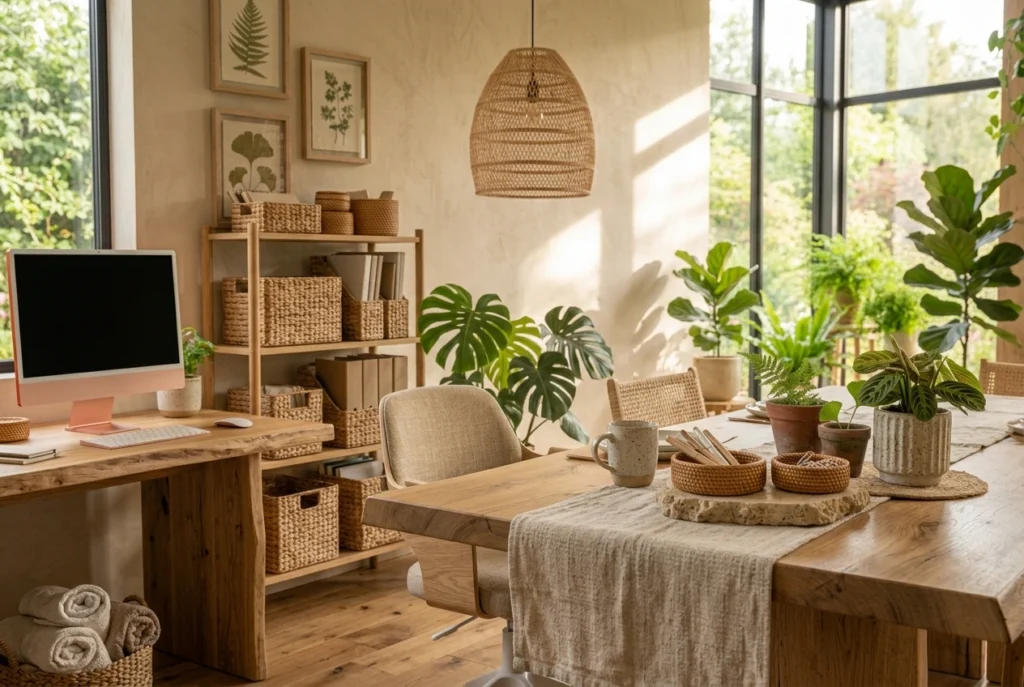
Instead of placing every plant on the floor, create different levels.
Put a large plant beside the sofa, medium plants on a console, small plants on shelves, and hanging plants near windows.
This makes greenery feel like part of the architecture.
Best combination: one large plant + two medium plants + several smaller plants.
2. Use Natural Wood as a Foundation
Wood immediately adds warmth and visual texture.
You don’t need an entirely wooden interior. One or two substantial pieces can make a difference.
Try:
- Oak coffee tables
- Walnut cabinets
- Bamboo shelving
- Wood dining tables
- Reclaimed wood accents
- Wooden picture frames
For a sophisticated look, avoid mixing too many unrelated wood tones.
| Wood Tone | Best With |
|---|---|
| Light oak | Cream, sage, beige |
| Walnut | Olive, terracotta, ivory |
| Natural pine | White, blue, green |
| Dark wood | Warm neutrals, brass |
3. Add Stone and Mineral Accents
Stone introduces an earthy quality that balances softer fabrics and greenery.
Consider a stone coffee table, marble tray, travertine lamp, slate planter, or small decorative bowl.
You don’t need to install expensive stone surfaces. A few carefully chosen accessories can provide the same visual direction.
4. Let Natural Light Become Part of the Decor
Don’t treat your windows as empty architectural spaces.
Keep them visually open whenever possible.
Use light curtains instead of heavy panels, position mirrors where they can reflect daylight, and avoid placing tall furniture directly in front of windows.
| Lighting Problem | Biophilic Solution |
|---|---|
| Dark room | Reflect daylight with mirrors |
| Heavy windows | Use sheer curtains |
| Harsh evening light | Use warm lamps |
| Empty sunny corner | Add suitable greenery |
| No natural light | Use layered artificial lighting |
5. Frame Outdoor Views With Curtains
If you have a view of trees, plants, water, or even a small garden, make it a focal point.
Hang curtains around—not across—the best part of the view.
This creates a visual relationship between your interior and exterior.
6. Build an Earth-Tone Color Palette
A biophilic palette doesn’t have to be green.
Some of the most attractive combinations include:
cream + sage + oak
sand + terracotta + walnut
olive + beige + natural wood
soft white + moss + stone
The trick is to repeat colors throughout the room so the palette feels intentional.
7. Mix Linen, Wool, Jute and Cotton
Texture is one of the easiest ways to make a room feel natural.
Try a linen sofa, wool throw, jute rug, cotton cushions, and woven basket in the same space.
The materials don’t need to match.
They simply need to feel connected.
8. Introduce Rattan and Woven Materials
Rattan, cane, wicker, and woven fibers can add a relaxed natural character.
Use them for:
- Accent chairs
- Pendant lights
- Baskets
- Headboards
- Storage cabinets
- Side tables
- Decorative trays
Avoid using too much of one material. A few woven elements usually look more refined than an entire room filled with rattan.
9. Choose Organic, Curved Furniture
Nature rarely uses perfectly rigid geometric lines everywhere.
Introduce softer forms through a rounded coffee table, curved sofa, oval mirror, arched cabinet, or sculptural chair.
This works especially well in modern interiors that contain many straight lines.
10. Add Botanical Artwork
Don’t have enough space for plants?
Use botanical art instead.
Large leaf prints, pressed-botanical artwork, landscapes, floral photography, and abstract nature-inspired paintings can bring visual references to nature into areas where living plants aren’t practical.
11. Use Nature-Inspired Patterns
Look beyond obvious tropical leaf prints.
Subtle patterns inspired by:
- Leaves
- Branches
- Waves
- Pebbles
- Flowers
- Clouds
- Mountains
- Grasses
can create a more sophisticated result.
12. Create an Indoor-Outdoor Connection
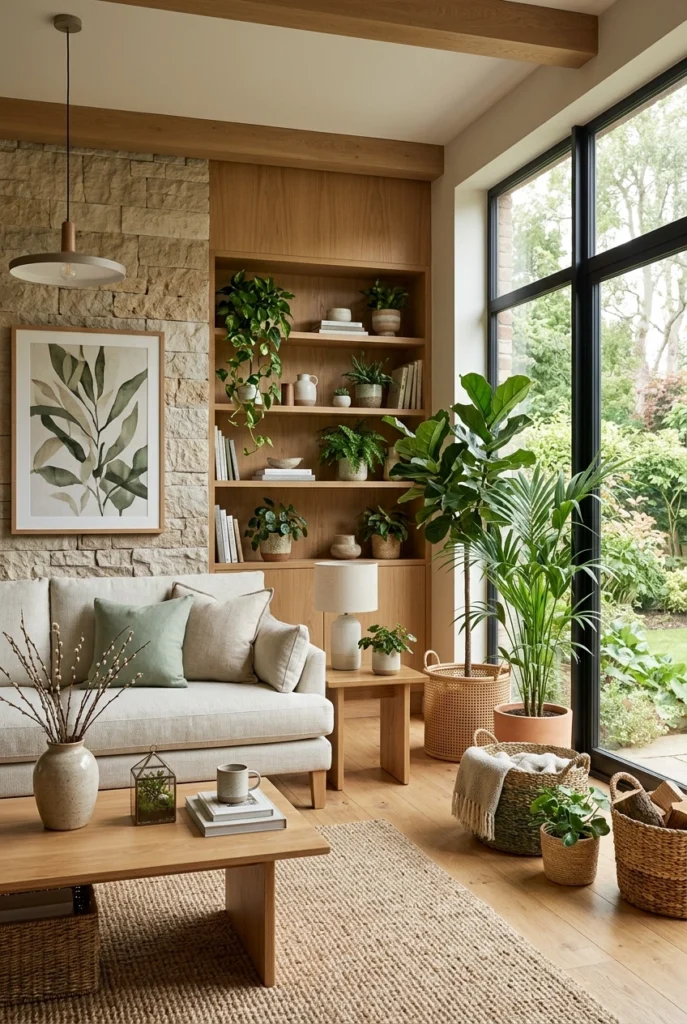
If your living room opens onto a balcony, patio, or garden, coordinate the two spaces.
Use similar colors and materials on both sides.
For example:
indoor linen + outdoor cushions + matching greenery + natural wood
can make the spaces feel visually connected.
13. Add a Statement Indoor Tree
One large plant can become the focal point of an entire room.
Choose a plant that suits the available light and the amount of maintenance you can realistically provide.
Place it where it has enough room to grow rather than squeezing it between furniture.
14. Style With Terracotta and Clay
Terracotta pots, ceramic vessels, clay lamps, and handmade pottery introduce an earthy quality.
These pieces work particularly well with:
cream + olive + natural wood + terracotta.
15. Choose Natural-Fiber Rugs
A rug can add one of the largest areas of natural texture to a room.
Jute, wool, cotton, and other natural-fiber options can work beautifully with wood and plants.
For a busy room, choose a simple texture rather than a complicated pattern.
16. Create a Green Reading Corner
Turn an unused corner into a small nature-inspired retreat.
Use a comfortable chair, floor lamp, small wooden table, plant, woven basket, and soft throw.
The result doesn’t need to be expensive.
The combination of greenery + texture + warm light does most of the work.
Biophilic Decor for Every Room
17. Create a Biophilic Living Room
The living room is usually the easiest place to start.
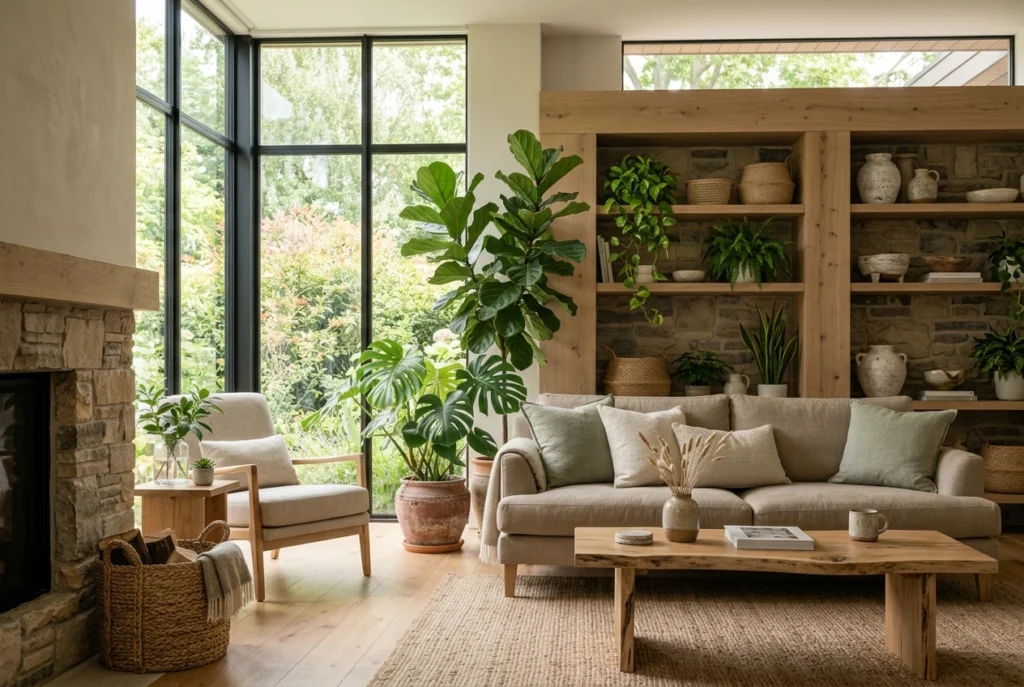
Combine a large indoor plant with natural wood furniture, a textured rug, linen or cotton upholstery, warm lighting, and one nature-inspired artwork.
Living Room Formula
Large plant + natural wood + textured rug + warm lighting + earthy accents
| Element | Recommended Choice |
|---|---|
| Sofa | Linen or textured fabric |
| Coffee table | Wood or stone |
| Rug | Jute or wool |
| Decor | Ceramic + greenery |
| Lighting | Warm layered lighting |
18. Bring Nature Into the Bedroom
Bedrooms benefit from a softer interpretation of biophilic design.
Use linen bedding, warm wood, muted green or earthy colors, natural fiber rugs, soft lighting, and one or two suitable plants.
Avoid turning the bedroom into a jungle.
The goal is calm, not clutter.
19. Create a Nature-Inspired Home Office
Place your desk near a window if possible.
Add a small plant, wooden accessories, natural-fiber storage, and a nature-inspired print.
Keep the desk relatively uncluttered so the natural elements remain visually noticeable.
20. Add Biophilic Details to the Kitchen
The kitchen doesn’t need dozens of plants.
Instead, use wooden cutting boards, herbs, ceramic containers, natural stone, open shelves, and warm lighting.
Fresh herbs can be especially useful because they combine visual greenery with a natural scent.
21. Turn the Bathroom Into a Natural Retreat
Bathrooms can work surprisingly well with biophilic styling.
Try:
- Wood-look accessories
- Stone trays
- Green plants suited to humidity
- Woven baskets
- Natural-colored towels
- Pebble-inspired accessories
- Warm lighting
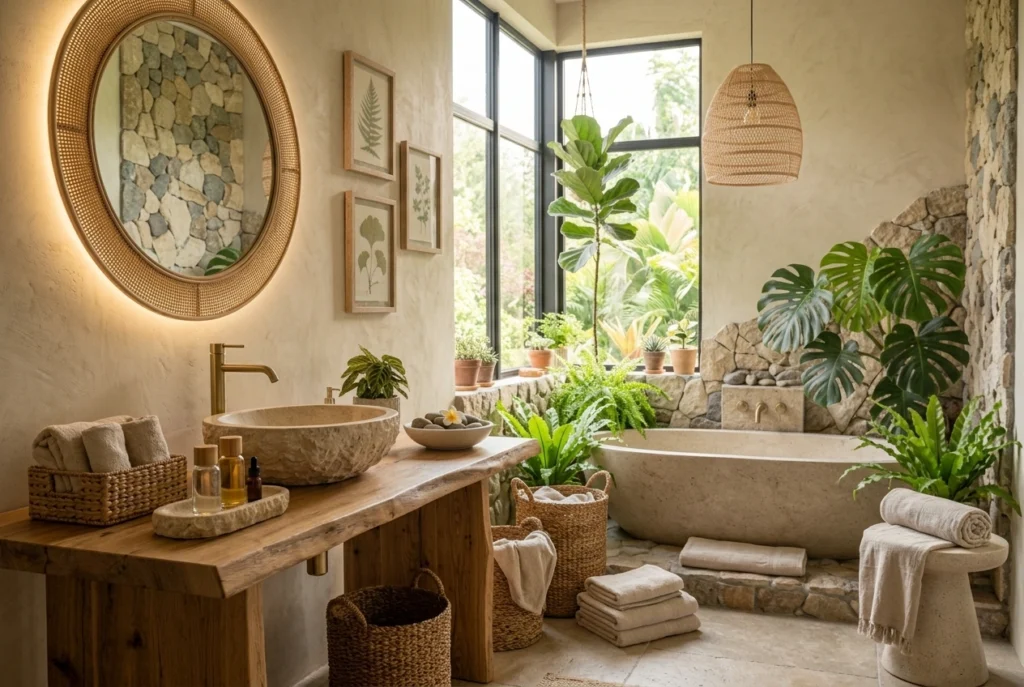
Keep the palette simple so the room feels like a retreat rather than a themed space.
22. Create a Calming Entryway
Add a small plant, wooden bench, woven basket, natural-fiber runner, and organic mirror.
If the area is narrow, use vertical greenery rather than bulky furniture.
23. Use Mirrors to Multiply Light and Views
Mirrors can make a biophilic room feel brighter without adding more decor.
Position a mirror opposite or near a window where it can reflect daylight or greenery.
A large rounded mirror also introduces an organic shape.
24. Layer Warm, Dynamic Lighting
A single ceiling light rarely creates a sophisticated interior.
Instead, use three layers:
Ambient: general illumination
Task: reading, cooking, working
Accent: highlighting plants, artwork, shelves, or architectural features
For evening use, warmer lighting can help maintain the cozy natural atmosphere.
25. Add Natural Scents Carefully
Biophilic design isn’t only visual.
Natural scents can contribute to the sensory experience.
Fresh herbs, flowers, cedar, eucalyptus, or subtle botanical fragrances can work well.
Keep scents light rather than overwhelming the room.
26. Use Water-Inspired Details
Water is another powerful visual reference to nature.
You don’t need an indoor fountain.
Try blue-green artwork, glass accessories, reflective surfaces, wave-inspired shapes, or a small tabletop water feature if practical.
27. Bring in Seasonal Nature
Let your decor change subtly throughout the year.
Spring
Fresh greenery and lighter textiles.
Summer
Lighter linen, herbs, and brighter natural tones.
Fall
Terracotta, warm wood, dried grasses, and wool.
Winter
Evergreen branches, heavier textures, and warm lighting.
This prevents the room from feeling static.
28. Display Meaningful Nature Finds
Nature-inspired decor doesn’t always have to come from a store.
Display meaningful objects such as:
- Interesting stones
- Dried branches
- Seashells
- Pressed leaves
- Driftwood
- Handmade pottery
The best objects are those that have some personal meaning rather than simply looking decorative.
29. Use Reclaimed and Sustainable Materials
Whenever practical, consider secondhand, reclaimed, repaired, or durable pieces.
A vintage wooden table can provide more character than a brand-new imitation.
Look for furniture that can stay useful for years rather than buying inexpensive pieces simply because they are trendy.
30. Create a Living-Wall Moment Without Installing a Green Wall
A full living wall can be expensive and difficult to maintain.
Create a smaller version instead.
Use a vertical plant stand, wall-mounted planters, hanging pots, or a tall shelving unit filled with greenery.
This gives you the visual impact of vertical planting without the complexity of a permanent installation.
How to Create Biophilic Home Decor on a Budget
You don’t need to redesign your entire home.
Start with the elements that provide the greatest visual change for the least money.
| Budget | Best Investment |
|---|---|
| Under $50 | Plants, pots, small textiles |
| $50–$100 | Rug, lamp, artwork |
| $100–$250 | Larger rug or statement plant |
| $250–$500 | Natural furniture or quality lighting |
| $500+ | Major furniture or architectural upgrades |
What to Buy New
Consider buying new when you need:
- A properly sized rug
- Lighting
- Plants
- Bedding
- Curtains
What to Thrift
Look for:
- Wooden tables
- Baskets
- Ceramic vessels
- Frames
- Mirrors
- Vintage furniture
What to DIY
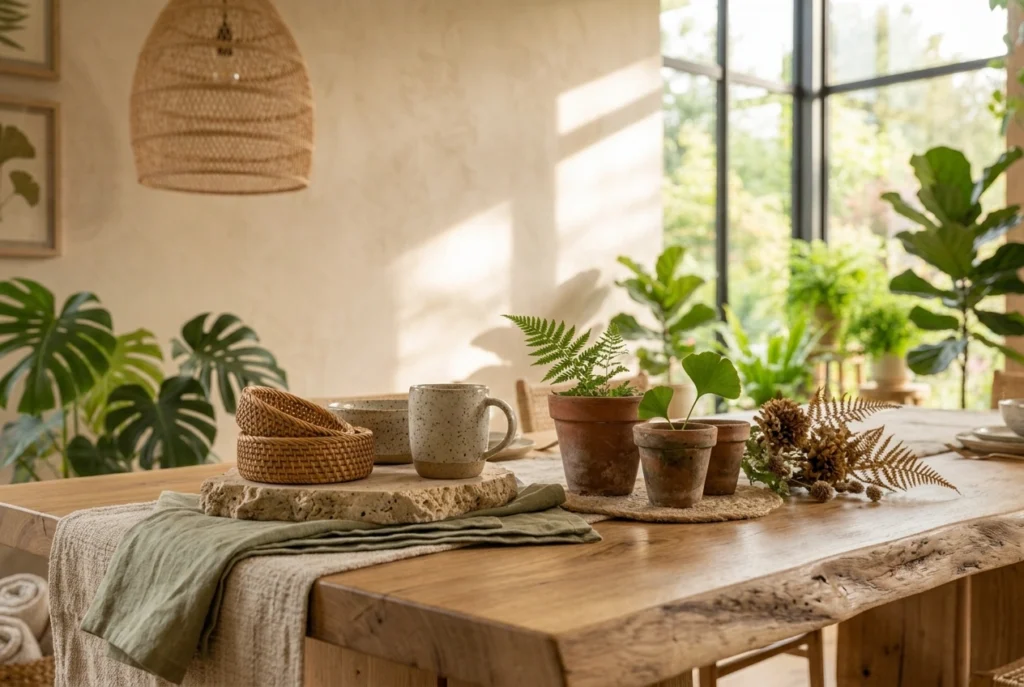
You can make simple nature-inspired decor using branches, dried plants, thrifted frames, clay pieces, or repurposed wooden objects.
The smartest budget strategy is to buy fewer, larger-impact pieces instead of dozens of small decorations.
Best Biophilic Plants for Different Homes
The right plant depends on the actual conditions in your room.
Don’t buy a plant simply because it looks good in a photograph.
Check its light, watering, humidity, size, and maintenance needs first.
| Plant Type | General Light Preference | Best For |
|---|---|---|
| Snake plant | Low to bright indirect | Beginners |
| Pothos | Low to bright indirect | Shelves |
| Monstera | Bright indirect | Statement greenery |
| Rubber plant | Bright indirect | Living rooms |
| Ferns | Indirect + humidity | Bathrooms |
| Fiddle-leaf fig | Bright indirect | Large focal point |
| Bird of paradise | Bright light | Large rooms |
Plant requirements vary by species and environment, so always check the specific care needs before purchasing.
Real Plants vs. Faux Plants
Both can have a place in a well-designed home.
| Feature | Real Plants | Faux Plants |
|---|---|---|
| Natural presence | Excellent | Moderate |
| Maintenance | Required | Very low |
| Cost over time | Varies | Usually one-time |
| Best for | Suitable light | Difficult spaces |
| Sensory benefit | Greater | Mainly visual |
Use real plants where conditions support healthy growth and realistic faux plants where maintenance or lighting makes living plants impractical.
How to Make a Small Apartment Biophilic
Small spaces require restraint.
Instead of filling every surface with plants, use vertical layers.
A tall plant can occupy an otherwise empty corner. A hanging plant can use unused vertical space. A narrow wooden shelf can display smaller plants without consuming floor space.
Small-Space Formula
One statement plant + one natural-texture rug + warm lighting + wood + mirror + limited accessories
This creates a stronger result than filling the apartment with random greenery.
How to Choose Natural Materials
Natural materials work best when they are balanced.
| Material | Character | Best Use |
|---|---|---|
| Oak | Light + warm | Furniture |
| Walnut | Rich + elegant | Tables/cabinets |
| Rattan | Casual + textured | Chairs/storage |
| Jute | Rustic + tactile | Rugs |
| Linen | Soft + relaxed | Curtains/bedding |
| Wool | Warm + luxurious | Rugs/throws |
| Bamboo | Light + natural | Furniture/accessories |
| Stone | Earthy + substantial | Tables/accessories |
| Terracotta | Warm + handmade | Planters |
You don’t need every material in one room.
Choose three or four and repeat them naturally.
Biophilic Color Palettes That Work
Cream + Sage + Oak
Best for bright, calm living spaces.
Sand + Terracotta + Walnut
Works beautifully in warm, earthy interiors.
Olive + Beige + Natural Wood
A sophisticated option for living rooms and bedrooms.
Moss + Cream + Stone
Creates a deeper, grounded palette.
Clay + Warm White + Light Oak
Works particularly well in modern homes.
| Palette | Mood |
|---|---|
| Sage + cream | Fresh |
| Olive + walnut | Rich |
| Sand + terracotta | Warm |
| Moss + stone | Grounded |
| Beige + oak | Soft |
Biophilic Home Decor vs. Other Natural Interior Styles
Biophilic design overlaps with several popular decorating styles, but the underlying focus is different.
| Style | Main Focus |
|---|---|
| Biophilic | Connection with nature |
| Organic Modern | Natural materials + modern forms |
| Japandi | Japanese simplicity + Scandinavian design |
| Scandinavian | Light, simplicity + functionality |
| Boho | Layered texture + eclectic styling |
| Wabi-Sabi | Imperfection + natural simplicity |
You can combine them.
For example, biophilic + Japandi can create a calm minimalist home with plants, wood, natural textures, and simple forms.
Common Biophilic Decor Mistakes
1. Adding Too Many Plants
More greenery doesn’t automatically mean better design.
2. Treating Plants as the Entire Concept
A room can be biophilic without being plant-heavy.
3. Mixing Too Many Wood Tones
Choose a controlled palette.
4. Ignoring Natural Light
Plant selection and furniture placement should respond to the actual light available.
5. Blocking Outdoor Views
Don’t hide your best connection to nature behind furniture or heavy curtains.
6. Making the Room Look Themed
Avoid turning every item into a leaf, tree, or botanical print.
7. Overcrowding Small Spaces
Biophilic design still needs breathing room.
8. Buying Plants Without Checking Their Needs
A beautiful plant that cannot survive in your room isn’t a good design decision.
9. Using Only One Natural Material
Combine different textures for depth.
10. Buying Decor Before Planning
Start with your light, layout, colors, and existing furniture.
11. Confusing Natural-Looking With Biophilic
A plastic room filled with faux wood finishes isn’t automatically biophilic.
12. Ignoring Personal Meaning
Your home should feel like your connection to nature, not a showroom.
How to Build a Biophilic Home Step by Step
You don’t have to transform every room in one weekend.
Step 1: Observe Your Natural Light
Identify which rooms receive bright, indirect, morning, afternoon, or very little light.
Step 2: Declutter
Remove unnecessary objects before adding new ones.
Step 3: Choose a Nature-Based Palette
Start with two or three main colors.
Step 4: Add One Large Natural Element
This could be a wooden table, large plant, natural rug, stone piece, or statement artwork.
Step 5: Add Greenery
Choose plants based on your home’s actual conditions.
Step 6: Layer Natural Textures
Introduce linen, wool, jute, rattan, cotton, or wood.
Step 7: Improve Lighting
Add task and accent lighting rather than relying entirely on one overhead fixture.
Step 8: Add Personal Nature-Inspired Details
Finish with objects that remind you of places, landscapes, or experiences you value.
Biophilic Home Decor Shopping Guide
Before buying anything, ask five questions:
- Does it add a natural material or texture?
- Does it improve the room visually or functionally?
- Does it work with my existing color palette?
- Will I actually maintain it?
- Would I still like it if the trend disappeared?
This helps prevent unnecessary purchases.
For higher-priced furniture, prioritize durability, repairability, construction quality, and timeless design rather than buying something simply because it is labeled “biophilic.”
Quick Biophilic Decor Decision Guide
| Your Problem | Start With |
|---|---|
| Room feels dark | Mirrors + layered lighting |
| Room feels cold | Wood + textiles |
| Empty corner | Large plant |
| Small room | Vertical greenery |
| Plain walls | Botanical artwork |
| No outdoor view | Plants + natural textures |
| Limited budget | Plants + textiles |
| Rental home | Freestanding decor |
| Too much clutter | Declutter before decorating |
| Modern room feels harsh | Curved furniture + organic textures |
Frequently Asked Questions
What Is Biophilic Home Decor?
Biophilic home decor is an approach that incorporates natural elements such as plants, daylight, wood, stone, organic shapes, earthy colors, natural textures, and outdoor views into interior spaces.
Is Biophilic Design Just Having Lots of Plants?
No. Plants are only one element. Light, materials, views, colors, textures, shapes, and sensory details can all contribute to a biophilic interior.
How Do I Make My Home More Biophilic?
Start with natural light, a few suitable plants, natural materials, earthy colors, organic shapes, and nature-inspired textures.
What Colors Are Best for Biophilic Interiors?
Sage, olive, moss, cream, beige, sand, terracotta, warm brown, muted blue, and other earthy shades work well.
What Materials Are Used in Biophilic Design?
Common choices include wood, stone, rattan, bamboo, cork, jute, linen, wool, cotton, clay, and terracotta.
Can Biophilic Design Work in a Small Apartment?
Absolutely. Use vertical plants, mirrors, natural textures, multifunctional furniture, and a limited number of statement pieces.
Can You Have Biophilic Design Without Plants?
Yes. Natural light, wood, stone, organic forms, earthy colors, botanical artwork, natural fabrics, outdoor views, and nature-inspired patterns can all contribute.
Is Biophilic Home Decor Expensive?
It doesn’t have to be. Plants, thrifted wood furniture, woven baskets, secondhand artwork, textiles, and simple lighting upgrades can create significant changes on a modest budget.
How Do I Make a Dark Room Feel More Biophilic?
Maximize available daylight, use mirrors strategically, choose lighter natural materials, add suitable low-light plants, and create layered warm lighting.
How Do I Avoid Making My Home Look Like a Jungle?
Use plants selectively and balance them with wood, textiles, stone, artwork, and open space.
What Is the Difference Between Biophilic and Organic Modern Design?
Organic modern design focuses heavily on modern furniture combined with natural materials and soft forms. Biophilic design has a broader focus on creating a connection with nature.
Is Biophilic Design the Same as Japandi?
No. Japandi combines Japanese and Scandinavian design principles. It can include biophilic elements, but biophilic design is specifically centered on connection with nature.
What Is the Easiest Way to Start?
Start with one healthy plant, one natural-texture piece, and better lighting. Then build gradually.
Final Verdict
The most successful biophilic home decor doesn’t look like a showroom filled with plants. It feels natural because several elements work together.
Start with light. Add living greenery. Introduce wood, stone, and natural fibers. Soften the room with organic shapes and earthy colors. Then strengthen the connection with outdoor views, botanical patterns, and personal nature-inspired details.
You don’t need to redesign your entire home.
A wooden coffee table, linen curtains, one beautiful plant, a natural-fiber rug, warm lighting, and a carefully chosen earthy palette can completely change the atmosphere.
The goal isn’t to bring everything from nature into your home. It’s to make your home feel more naturally connected to the world outside.