

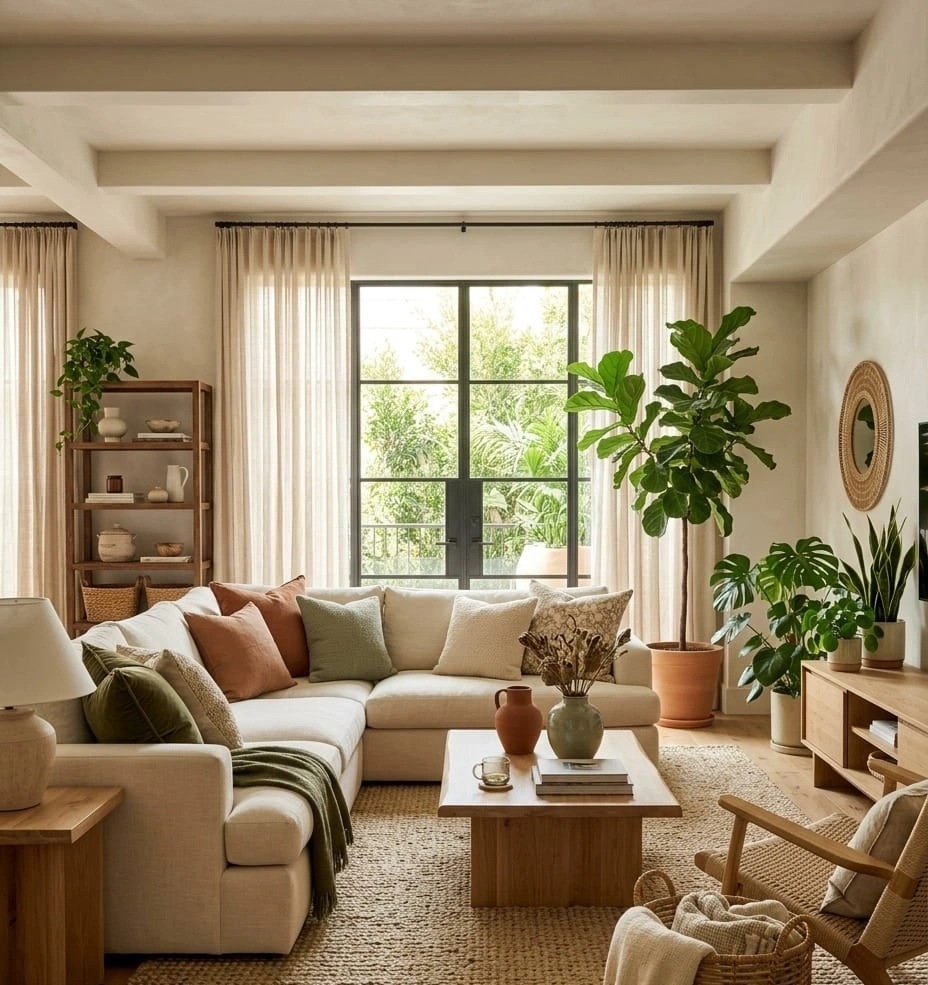
A layered comfort living room should feel inviting the moment you walk in. It isn’t about filling the room with pillows, blankets, and decorations. Instead, it’s about combining furniture, texture, color, lighting, natural materials, and personal details in a balanced way.
The best part? You don’t need to completely redesign your living room. Small changes—such as replacing a flat rug, adding warmer lighting, introducing natural textures, or rearranging furniture—can make a surprisingly big difference.
Whether you have a small apartment, a large family room, or an open-plan space, these layered living room ideas will help you create a room that feels warm, comfortable, polished, and lived-in.
What Is a Layered Comfort Living Room?
A layered comfort living room uses multiple design elements to create visual depth and physical comfort. Instead of depending on one color or material, the room combines different layers that complement one another.
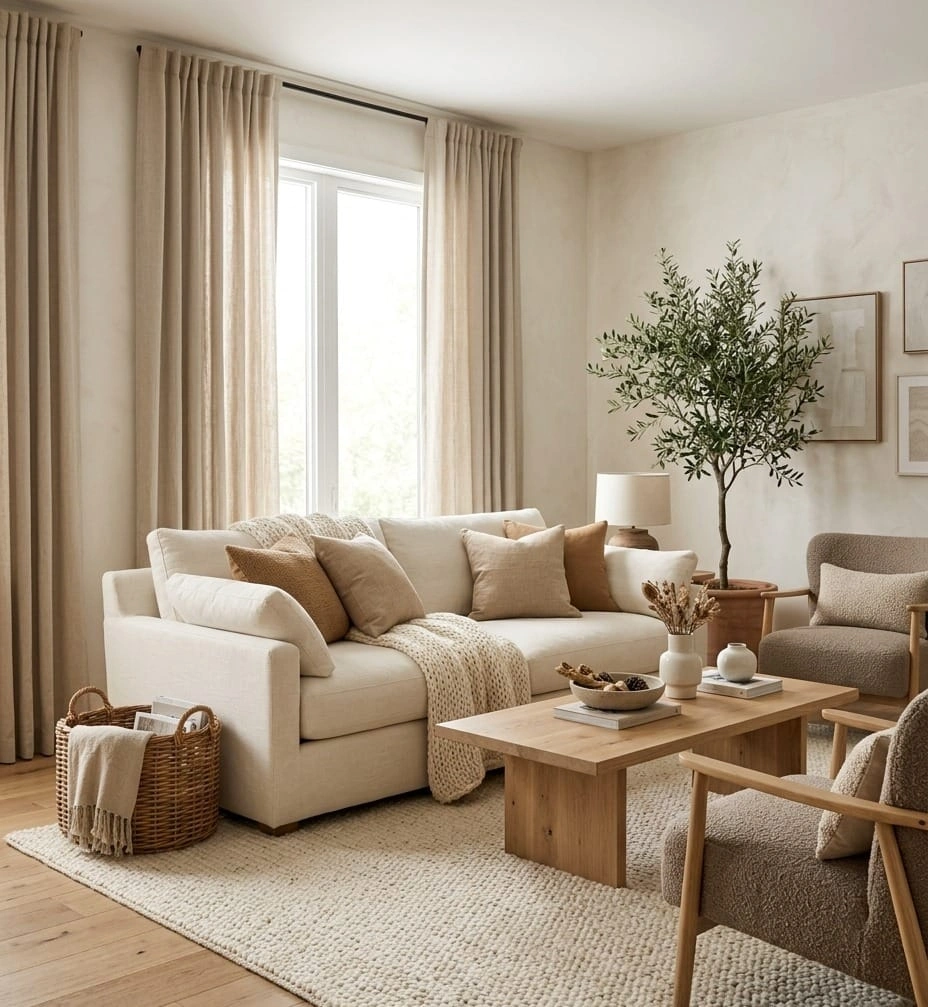
The foundation might be a neutral sofa and large area rug. Textured cushions and throws then add softness, while wood, rattan, plants, artwork, and warm lighting provide additional depth.
The Five Essential Layers
| Layer | Examples | Purpose | Design Effect |
|---|---|---|---|
| Foundation | Walls, flooring, rug | Creates the base | Establishes cohesion |
| Furniture | Sofa, chairs, tables | Provides function | Defines the layout |
| Textiles | Cushions, throws, curtains | Adds softness | Makes the room inviting |
| Natural elements | Wood, plants, rattan | Adds organic texture | Creates warmth |
| Accessories + lighting | Lamps, artwork, ceramics | Adds personality | Finishes the room |
Layering vs. Clutter
This distinction matters.
Layering means adding elements that have a purpose and work together.
Clutter happens when too many unrelated objects compete for attention.
A useful approach is to mix textures while keeping the overall color palette controlled.
How to Plan Your Layered Living Room
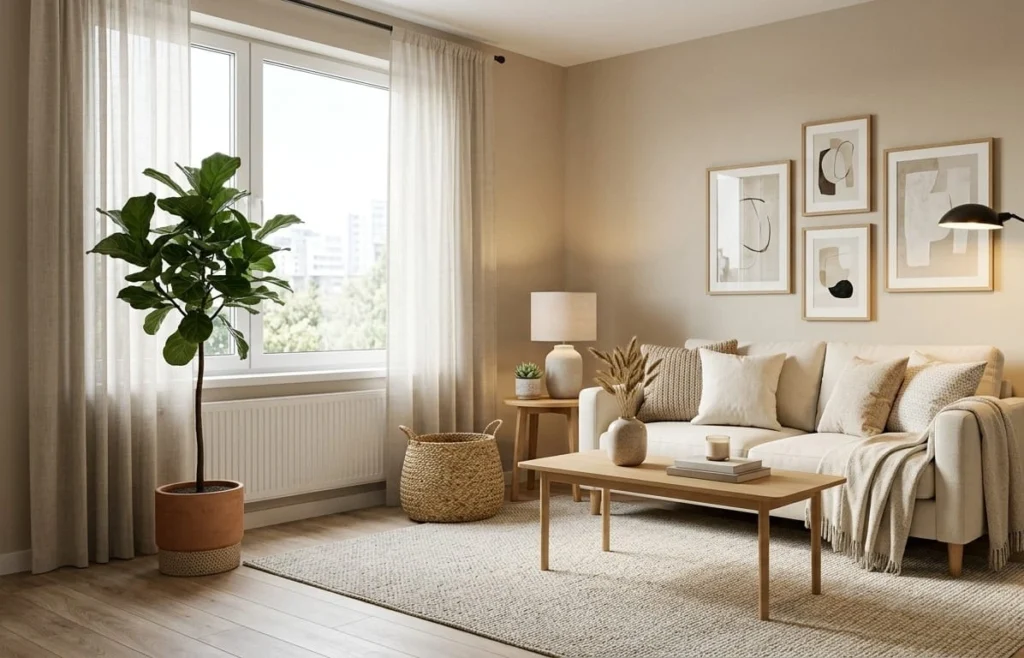
Before shopping for accessories, take a few minutes to assess your room.
Measure the available floor area, note where natural light enters, identify architectural features, and decide how you actually use the space.
Do you watch movies, entertain guests, read, work from home, or spend quiet evenings there?
Your answers should influence the layout.
| Room Situation | Best Strategy | What to Prioritize |
|---|---|---|
| Small apartment | Keep furniture compact | Storage + open floor space |
| Large living room | Create separate zones | Scale + multiple seating areas |
| Open-plan space | Define the living zone | Rug + furniture placement |
| Family room | Choose durable materials | Washable fabrics + storage |
| Rental | Use removable décor | Lighting + textiles |
| Dark room | Increase reflective surfaces | Lamps + lighter colors |
How to Layer a Living Room Step by Step
1. Start With a Comfortable Sofa
The sofa is usually the largest piece in the room, so it should be both comfortable and visually appropriate.
Look for supportive cushions, durable upholstery, and a size that leaves enough room for movement.
If you already have a good sofa, don’t replace it just because the room looks plain. New textiles and better lighting can transform it.
2. Choose the Right Rug
A rug visually anchors the furniture.
Ideally, the rug should extend far enough to connect the main seating pieces. A rug that’s too small can make an otherwise beautiful room feel fragmented.
For a small living room, choose the largest practical rug that doesn’t interfere with doors or walkways.
3. Add Accent Seating
An accent chair introduces another shape, color, or material.
Try pairing:
- Linen sofa + bouclé chair
- Leather sofa + fabric chair
- Neutral sofa + patterned chair
- Sectional + wooden accent chair
This creates variation without making the room feel mismatched.
4. Introduce Cushions
Use different sizes and textures rather than buying an identical set.
Start with larger cushions at the back and smaller decorative cushions toward the front.
5. Add Throws
A throw adds softness and makes the sofa look more relaxed.
Drape it over one arm rather than covering the entire sofa.
6. Layer Curtains
Floor-length curtains soften the windows and add another vertical layer.
Linen and linen-look fabrics are particularly useful for creating a relaxed appearance.
7. Add Natural Materials
Wood, rattan, woven baskets, stone, ceramic, and plants prevent a neutral room from looking flat.
8. Introduce Greenery
One large plant can often have more impact than several tiny decorative objects.
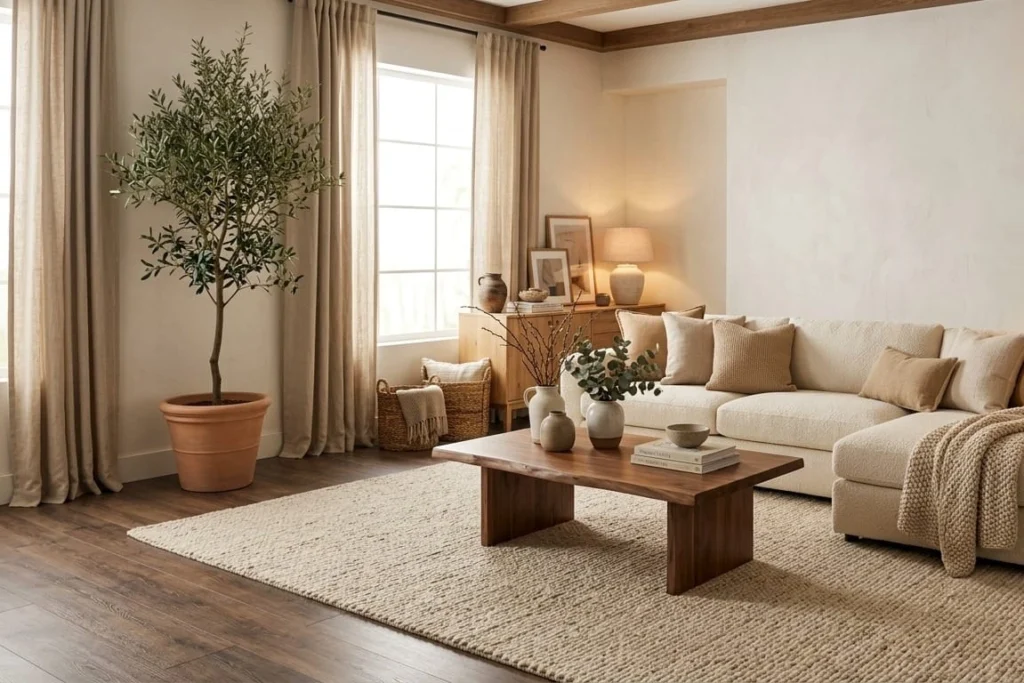
Choose plants based on the natural light your room receives and how much maintenance you’re willing to provide.
9. Style the Coffee Table
Keep the arrangement intentional.
A tray, two books, a ceramic bowl, and a small vase are often enough.
10. Finish With Accessories
Artwork, mirrors, candles, books, and personal objects should be the final layer—not the starting point.
Layering Formula
| Layer | Suggested Material | Placement | Design Effect |
|---|---|---|---|
| Base | Large rug | Under seating | Grounds room |
| Furniture | Upholstery + wood | Main seating area | Establishes structure |
| Softness | Linen + wool | Sofa/chairs | Adds comfort |
| Natural texture | Rattan + wood | Tables/baskets | Adds warmth |
| Greenery | Plants | Corners/shelves | Adds life |
| Lighting | Lamps | Around seating | Creates atmosphere |
| Personality | Art + objects | Walls/surfaces | Adds character |
How to Mix Textures Without Making the Room Look Busy
Texture is one of the most important parts of a layered interior.
The trick is contrast.
If your sofa is smooth, add a chunky throw. If your rug is heavily textured, choose smoother furniture nearby.
Useful Texture Combinations
| Texture | Best Partner | Overall Effect |
|---|---|---|
| Linen | Wool | Soft + relaxed |
| Bouclé | Smooth wood | Cozy + modern |
| Velvet | Brass/wood | Rich + elegant |
| Jute | Cotton | Natural + casual |
| Leather | Wool | Warm + sophisticated |
| Rattan | Linen | Organic + airy |
| Ceramic | Wood | Handmade + grounded |
The Three-Texture Rule
If you’re unsure where to begin, choose three major textures:
One soft + one natural + one structured
For example:
Wool + rattan + wood
This creates depth without overwhelming the room.
How to Choose Colors for a Cozy Layered Living Room
You don’t need a colorful room to create visual interest.
Warm neutrals can look incredibly sophisticated when their textures and tones vary.
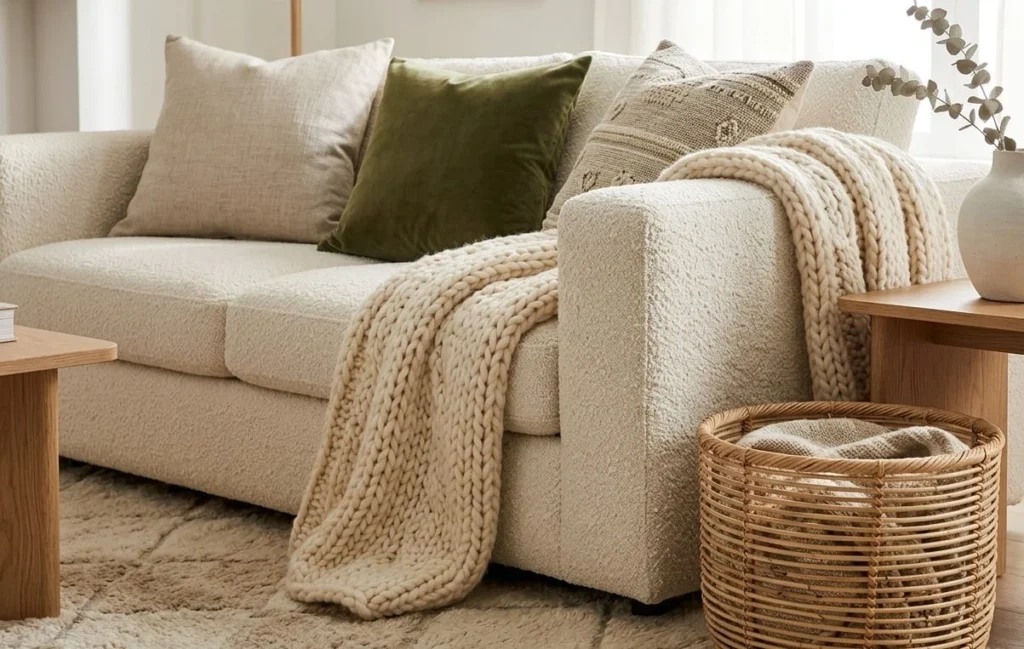
Warm Neutral Palette
Cream, beige, taupe, camel, and walnut create a timeless environment.
Earthy Palette
Olive, terracotta, tan, cream, and natural wood create an organic atmosphere.
Moody Palette
Chocolate brown, forest green, charcoal, and warm ivory create a dramatic evening feel.
Light and Airy Palette
Warm white, sand, pale blue, light oak, and soft gray work well in bright rooms.
60-30-10 Color Approach
A simple guideline is:
- 60%: dominant color
- 30%: secondary color
- 10%: accent color
| Palette | 60% Base | 30% Secondary | 10% Accent | Mood |
|---|---|---|---|---|
| Warm Neutral | Cream | Beige | Camel | Soft |
| Earthy | Warm white | Olive | Terracotta | Natural |
| Modern | Ivory | Walnut | Charcoal | Sophisticated |
| Organic | Sand | Sage | Brown | Calm |
| Moody | Cream | Chocolate | Forest green | Dramatic |
| Coastal | Warm white | Sand | Muted blue | Airy |
The 60-30-10 method is a guideline, not a strict rule. The room should still feel natural rather than mathematically divided.
How to Layer Living Room Lighting
A cozy living room rarely depends on one ceiling light.
Instead, use three levels:
Ambient lighting: General illumination.
Task lighting: Light for reading, working, or specific activities.
Accent lighting: Decorative light that highlights artwork, plants, or architectural features.
| Lighting | Location | Main Purpose | Atmosphere |
|---|---|---|---|
| Ceiling fixture | Center | General light | Balanced |
| Floor lamp | Sofa/chair | Reading | Cozy |
| Table lamp | Side table | Ambient | Intimate |
| Wall sconce | Wall | Accent | Refined |
| Picture light | Artwork | Highlighting | Elegant |
| LED candle | Table/shelf | Decorative | Relaxed |
For evenings, warm lighting generally feels more comfortable than very cool, blue-toned light.
25 Layered Comfort Living Room Ideas
1. Warm Neutral Retreat
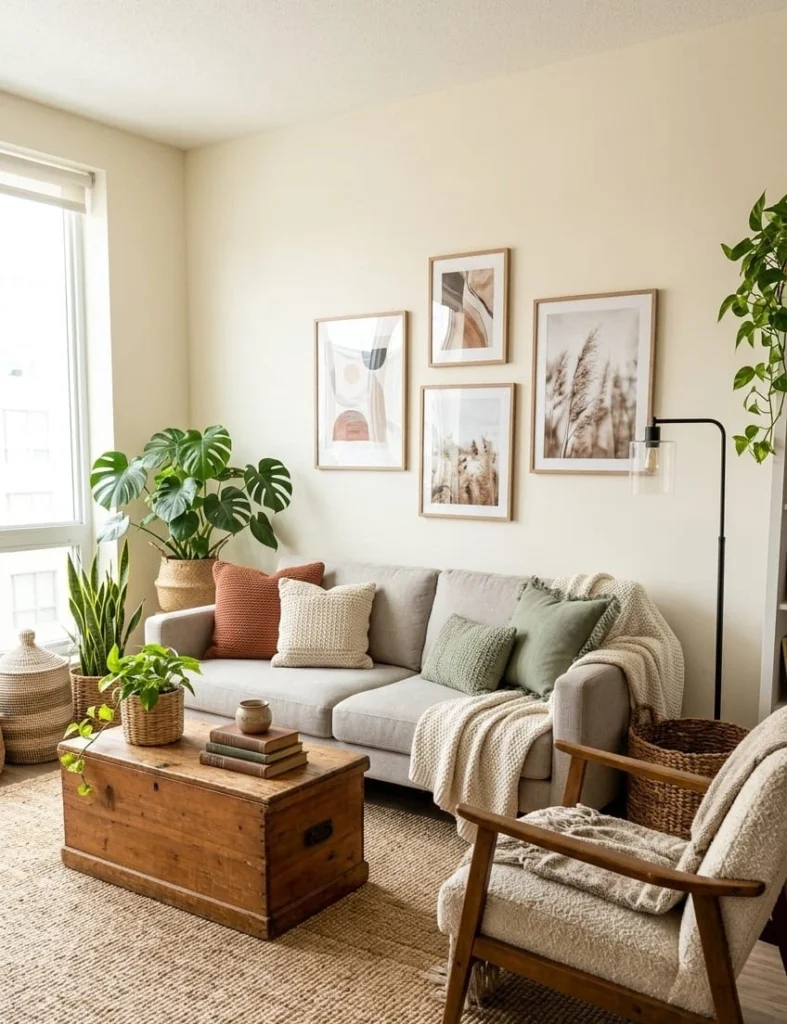
Combine a cream sofa, beige rug, walnut furniture, linen curtains, and warm lighting.
Best for: Timeless homes.
2. Scandinavian Cozy
Use pale wood, simple furniture, wool textiles, neutral colors, and minimal accessories.
Best for: Small and bright rooms.
3. Modern Organic
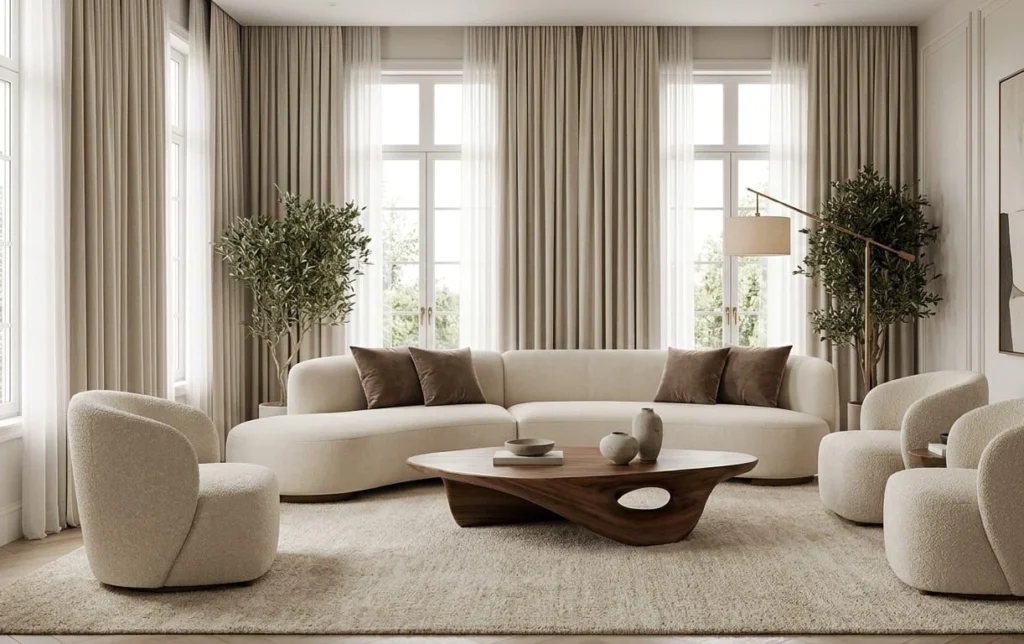
Combine curved furniture, natural wood, stone, linen, and greenery.
Best for: Contemporary homes.
4. Cozy Apartment
Use a compact sofa, large rug, multifunctional storage, and wall-mounted lighting.
Best for: Apartment living.
5. Earthy Living Room
Layer olive, terracotta, tan, cream, and natural wood.
Best for: Nature-inspired interiors.
6. Japandi Comfort
Combine Japanese simplicity with Scandinavian warmth.
Best for: Calm, uncluttered rooms.
7. Layered Beige Room
Mix cream, oatmeal, taupe, camel, and warm brown through different textures.
Best for: Neutral lovers.
8. Green and Natural Wood
Use plants, wood furniture, woven accessories, and soft neutral upholstery.
Best for: Biophilic interiors.
9. Moody Cozy Room
Use chocolate brown, charcoal, forest green, and warm lamps.
Best for: Dramatic evening spaces.
10. Warm Minimalist Room
Keep accessories limited while using textiles and natural materials to create warmth.
Best for: Minimalist homeowners.
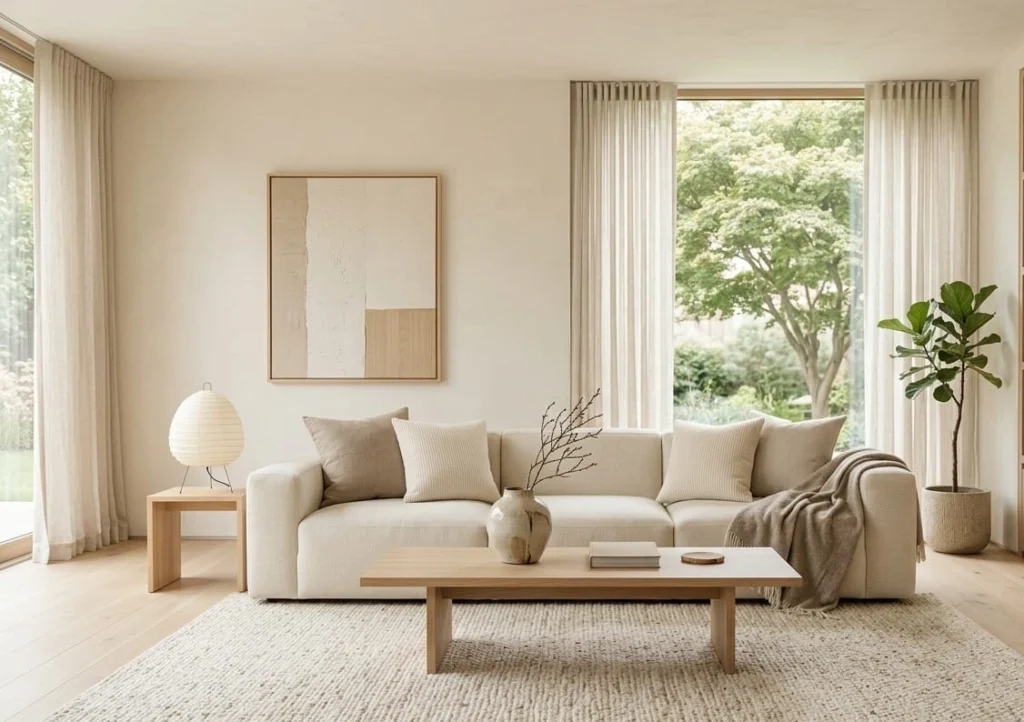
11. Boho Layered Space
Combine rattan, woven baskets, patterned cushions, plants, and vintage accessories.
Best for: Relaxed homes.
12. Vintage + Modern Mix
Pair contemporary seating with vintage furniture, artwork, and a character-filled rug.
Best for: Eclectic interiors.
13. Fireplace Focal Point
Arrange seating around the fireplace and reinforce it with artwork and warm lighting.
Best for: Traditional homes.
14. Small Living Room
Use a compact sofa, appropriately sized rug, nesting tables, and vertical storage.
Best for: Small spaces.
15. Family-Friendly Room
Choose durable upholstery, washable textiles, rounded furniture, and hidden storage.
Best for: Busy families.
16. Luxury Layered Room
Use premium-looking textiles, sculptural lighting, large artwork, and fewer but stronger accessories.
Best for: Sophisticated interiors.
17. Budget-Friendly Makeover
Keep your existing furniture and upgrade the room with a rug, cushions, throws, lamps, and plants.
Best for: Affordable renovations.
18. Reading Corner
Add a comfortable chair, small side table, floor lamp, and throw to an unused corner.
Best for: Book lovers.
19. Plant-Filled Living Room
Use large plants in corners and smaller plants on shelves and tables.
Best for: Nature lovers.
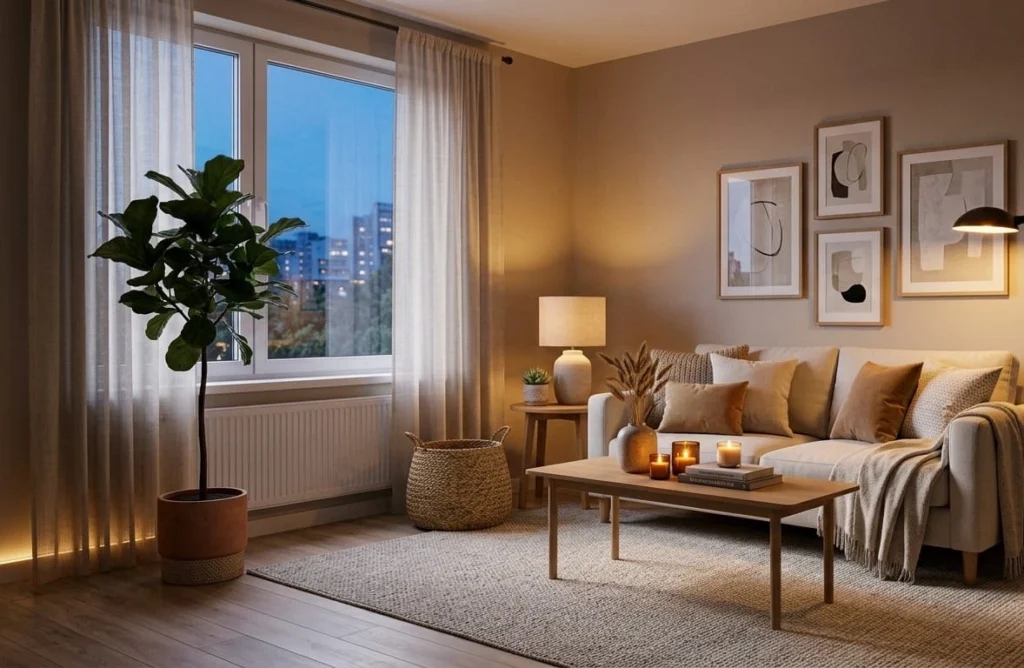
20. Cozy Evening Setup
Focus on warm lamps, soft textiles, candles, and darker accents.
Best for: Relaxing at night.
21. Open-Plan Living Room
Use a large rug and furniture arrangement to visually define the living area.
Best for: Open floor plans.
22. Rental-Friendly Design
Use removable artwork, freestanding lamps, textiles, plants, and furniture that doesn’t require permanent installation.
Best for: Renters.
23. Neutral Textured Room
Let texture—not color—create visual interest through wool, linen, wood, ceramic, and woven materials.
Best for: Neutral interiors.
24. Small Apartment Layout
Choose furniture with hidden storage and flexible functions.
Best for: Compact homes.
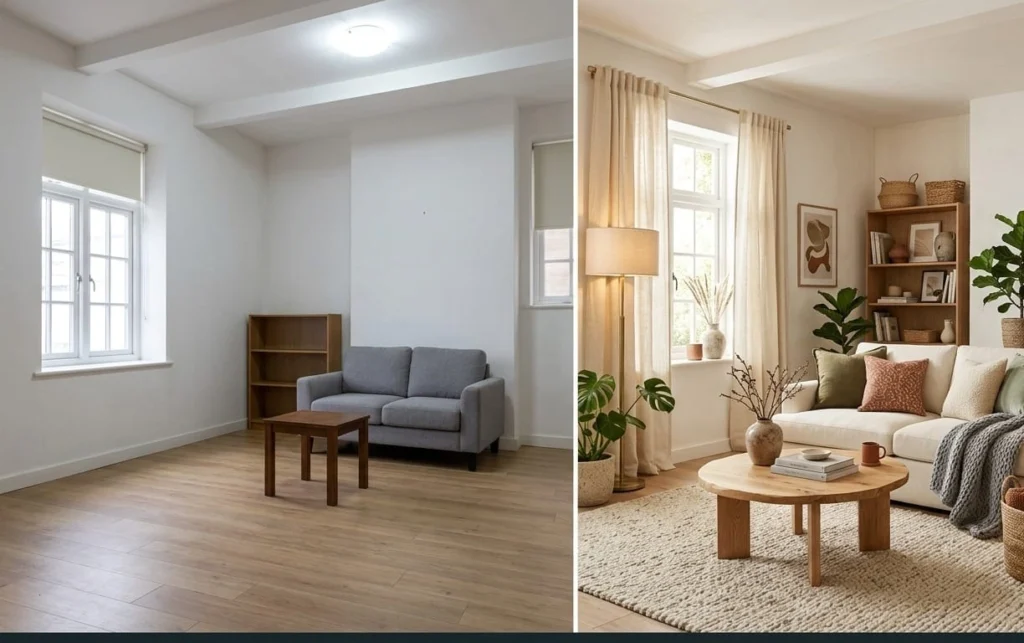
25. Warm Modern Living Room
Combine clean-lined furniture with warm wood, soft textiles, rounded accessories, and ambient lighting.
Best for: Modern homeowners.
Quick Comparison
| Idea | Style | Best For | Key Layer | Budget |
|---|---|---|---|---|
| Warm Neutral | Timeless | Most homes | Linen + wool | $$ |
| Scandinavian | Minimal | Small rooms | Wool + wood | $$ |
| Modern Organic | Contemporary | Modern homes | Wood + stone | $$$ |
| Boho | Relaxed | Eclectic homes | Rattan + textiles | $$ |
| Japandi | Calm | Minimalists | Wood + neutral textiles | $$$ |
| Budget Makeover | Affordable | Renters | Textiles + lighting | $ |
| Luxury | Elegant | Large rooms | Premium textiles | $$$$ |
| Family-Friendly | Practical | Families | Durable fabrics | $$ |
How to Make a Small Living Room Feel More Comfortable
Small rooms need careful layering.
The goal isn’t to eliminate décor. It’s to make every piece work harder.
Use furniture with storage, choose appropriately sized seating, and avoid filling every surface.
| Small-Room Problem | Better Solution | Why It Works |
|---|---|---|
| Room feels cramped | Choose compact furniture | Preserves floor space |
| Floor feels disconnected | Use one large rug | Connects seating |
| Too much clutter | Hidden storage | Keeps surfaces clear |
| Dark corners | Floor/table lamps | Adds depth |
| Bare walls | Large artwork | Creates one strong focal point |
| Little floor space | Vertical storage | Uses wall area |
A small living room can actually feel cozier than a large one because the seating area naturally feels more intimate.
How to Make a Large Living Room Feel Cozy
Large rooms can have the opposite problem: they feel empty.
Instead of placing furniture around the perimeter, create zones.
For example, one area can be for conversation while another becomes a reading or television zone.
| Large-Room Element | Strategy | Result |
|---|---|---|
| Large rug | Anchor seating | Creates a defined zone |
| Sectional | Main seating | Adds visual weight |
| Accent chairs | Face sofa | Encourages conversation |
| Console | Fill empty wall | Adds structure |
| Floor lamps | Fill vertical space | Adds warmth |
| Large artwork | Create focal point | Prevents blank-wall effect |
You don’t need an expensive designer budget to create an elevated appearance.
Focus on proportion, restraint, and materials.
Use Fewer Accessories
A carefully selected vase often looks more sophisticated than a shelf packed with small objects.
Choose Oversized Artwork
One large artwork can create more impact than many tiny frames.
Upgrade Lighting
Good lighting is one of the easiest ways to make a room feel more sophisticated.
Use Full-Length Curtains
Properly positioned curtains make windows feel larger and soften the room.
Hide Everyday Clutter
Use baskets, cabinets, ottomans, and storage furniture.
| High-End Effect | Affordable Approach |
|---|---|
| Designer rug | Textured neutral rug |
| Custom curtains | Ready-made curtains hung correctly |
| Luxury cushions | Mix affordable textured covers |
| Designer lighting | Sculptural budget lamp |
| Expensive artwork | Oversized framed print |
| Built-in storage | Stylish console cabinet |
How to Layer a Living Room on a Budget
You can create a significant transformation without buying everything at once.
| Budget | Best Investments | Expected Impact |
|---|---|---|
| Under $50 | Cushions, throw, plants | Quick refresh |
| $50–$150 | Lighting, artwork, baskets | Noticeable upgrade |
| $150–$300 | Rug + textiles | Major transformation |
| $300–$600 | Seating + lighting | Complete style change |
| $600+ | Furniture + premium rug | Full redesign |
Best strategy: spend more on pieces you use every day and save on accessories that can be replaced easily.
How to Mix Furniture and Wood Tones
You don’t have to match every wood finish.
In fact, slightly different wood tones can make a room feel more collected and natural.
| Wood Combination | Visual Effect | Best Pairing |
|---|---|---|
| Light oak + white | Airy | Scandinavian |
| Walnut + cream | Warm | Modern |
| Walnut + black | Dramatic | Contemporary |
| Natural oak + rattan | Organic | Boho |
| Medium oak + olive | Earthy | Organic |
| Dark wood + beige | Rich | Traditional |
Keep the undertones reasonably compatible. Extremely different finishes can work, but they should look intentional rather than accidental.
Designer Rules for a Balanced Layered Living Room
Use the Three-Texture Rule
Combine at least three noticeably different materials.
Repeat Colors
If a color appears once, repeat a related tone elsewhere.
Balance Visual Weight
A heavy dark sofa can be balanced with lighter walls, a substantial rug, or lighter accessories.
Protect Negative Space
Not every shelf or corner needs decoration.
Establish a Focal Point
Choose one major feature—fireplace, artwork, view, media wall, or architectural detail—and let the room support it.
Consider Scale
Large rooms generally need larger furniture and accessories. Small rooms benefit from appropriately scaled pieces.
These principles help prevent the most common problem with layered decorating: a room that looks busy instead of cozy.
Layered Comfort Living Room Shopping Guide
| Item | Budget | Mid-Range | Premium | What to Check |
|---|---|---|---|---|
| Sofa | Performance fabric | Quality upholstery | Linen/wool | Frame + comfort |
| Rug | Synthetic | Wool blend | Hand-knotted wool | Size + durability |
| Cushions | Cotton | Linen blend | Velvet/linen | Insert quality |
| Throw | Acrylic | Wool blend | Premium wool | Softness |
| Curtains | Linen-look | Linen blend | 100% linen | Length |
| Lamp | Basic | Adjustable | Sculptural | Light quality |
| Basket | Fabric | Woven | Handcrafted | Strength |
| Coffee table | Simple wood | Solid wood | Stone/wood | Proportion |
12 Common Layering Mistakes
| Mistake | Problem | Better Solution |
|---|---|---|
| Rug is too small | Seating feels disconnected | Choose a larger rug |
| Too many pillows | Sofa looks crowded | Mix fewer, better cushions |
| One light source | Room feels flat | Add multiple lamps |
| Too many colors | Visual chaos | Limit main palette |
| Matching everything | Room looks staged | Mix complementary pieces |
| Too many accessories | Clutter | Edit surfaces |
| Wrong furniture scale | Poor proportions | Measure first |
| No storage | Everyday mess | Add baskets/cabinets |
| Ignoring texture | Room feels flat | Mix materials |
| Curtains too short | Windows look smaller | Use longer panels |
| Furniture against every wall | Room lacks intimacy | Create seating zones |
| Buying décor first | Poor functionality | Start with layout |
Final Layered Living Room Checklist
Before you call your room finished, check these elements:
| Element | Check |
|---|---|
| Sofa | Comfortable and appropriately sized |
| Rug | Large enough to connect seating |
| Cushions | Mixed textures and sizes |
| Throw | Adds softness without clutter |
| Lighting | Multiple sources |
| Curtains | Correct length |
| Natural materials | Wood, rattan, plants, or stone |
| Artwork | Clear focal point |
| Storage | Everyday items have a home |
| Color | Repeated throughout the room |
| Texture | At least three distinct textures |
| Layout | Easy movement |
| Accessories | Intentional rather than excessive |
| Negative space | Some surfaces remain clear |
Frequently Asked Questions
How do you make a living room look cozy but not cluttered?
Use a controlled color palette, several complementary textures, practical storage, and fewer but more meaningful accessories.
How do you layer a neutral living room?
Combine different shades of cream, beige, taupe, brown, or gray with contrasting textures such as wool, linen, wood, rattan, and ceramic.
How do you make a living room look expensive?
Focus on good proportions, appropriate rug size, layered lighting, full-length curtains, quality-looking textiles, and intentional accessories.
What colors make a living room feel warm?
Cream, beige, camel, terracotta, warm brown, olive, muted gold, and earthy green can create a warm atmosphere.
Should all living room furniture match?
No. Coordinated furniture usually looks more interesting than an identical matching set.
How do you mix patterns in a living room?
Keep the colors connected and vary the scale. For example, combine a subtle small pattern with a larger, simpler pattern.
How can I layer a living room on a budget?
Start with inexpensive high-impact changes such as cushions, throws, lighting, plants, and an area rug before replacing major furniture.
How do you make a large living room feel less empty?
Create multiple functional zones using rugs, seating groups, lighting, artwork, and appropriately scaled furniture.
How do you make a beige living room interesting?
Use different shades of beige and introduce contrasting textures such as wool, linen, wood, rattan, velvet, and ceramic.
Is layered decorating suitable for minimalist homes?
Yes. Minimalist layering focuses on texture, natural materials, and carefully selected pieces rather than large quantities of décor.
How do you make a living room feel cozy at night?
Use several warm light sources, soft throws, cushions, curtains, and darker or warmer accent tones.
Final Verdict
A layered comfort living room isn’t about buying more. It’s about choosing better layers.
Start with comfortable furniture and a properly sized rug. Build softness with cushions, throws, and curtains. Add warmth through wood, woven materials, plants, and ceramics. Then use multiple lighting sources to create a welcoming atmosphere after sunset.
Keep your colors connected, vary your textures, respect the scale of the room, and leave enough negative space for everything to breathe.
Most importantly, design the room around how you actually live.
A beautiful living room may catch your eye, but a well-layered living room should make you want to sit down, relax, and stay awhile.